How to Start Prepping: What to Prioritize First
Start with what you need first if services stop: water, then food, light and information, first aid and medications, cash and documents, a way to reach your household, and a plan to leave. Most of it is a normal shopping trip, done in the right order.
By Aditya BawankuleUpdated
Disclosure: This page contains affiliate links. We may earn a commission on purchases at no cost to you. Read the disclosure
Where should a beginner start prepping?
Start by working out how exposed you are, then stock supplies in the order you would need them: water, food, light and a radio, first aid and medications, cash and documents, a communication plan, and evacuation readiness. That order follows the federal Ready.gov supply list and CDC water guidance, and it covers the situations most households actually face: power outages, storms, water advisories, and short evacuations.
Prepping for beginners (preparing a household to get through a disruption without outside help for a while) is mostly about sequence, not spending. Ready.gov notes that after an emergency you may need to get by on your own for several days. The table below is the full sequence; each step has its own section and a deeper guide.
| Step | Priority | Starting baseline | Go deeper |
|---|---|---|---|
| 1 | Know your risks and dependencies | List local hazards and everything at home that needs power or a network | Communications and payment outages |
| 2 | Water | 1 gallon per person per day, at least 3 days, 14 days if possible | Water storage containers |
| 3 | Food | At least several days of non-perishable food your household will eat | Food buckets vs. a grocery reserve |
| 4 | Light, power, and a radio | A flashlight per person, spare batteries, a power bank, a battery or crank radio | Emergency kit builder |
| 5 | First aid and medications | A first aid kit, a written medication list, and an emergency supply plan from your pharmacist | Two-week household plan |
| 6 | Documents and cash | Small bills at home; copies of IDs, insurance, and medical information | Payment outages |
| 7 | Communication plan | Alerts turned on, a household contact plan, an out-of-area contact, a meeting place | Communications outages |
| 8 | Evacuation readiness | A go-bag, destinations in more than one direction, at least a half tank of gas | Go bag list |
Step 1: How exposed are you if normal services stop?
Your exposure depends on two things: which hazards are likely where you live, and how much of your daily life runs on electricity, running water, and a network. Ready.gov's planning guidance starts with knowing which disasters could affect your area, and FEMA's National Risk Index lets you look up natural hazard risk by county.
Then list your dependencies. Ready.gov notes that a power outage can disrupt communications, water, and transportation, close grocery stores, gas stations, ATMs, and banks, spoil food, and stop medical devices from working. Walk through your home and write down what needs power: a well pump, a refrigerator holding medication, a CPAP or oxygen concentrator, an electric stove, the router you use for Wi-Fi calling. Each item on that list is something to plan around.
Step 2: How much water should you store first?
Store at least 1 gallon of water per person per day. The CDC recommends at least a 3-day supply and a 2-week supply if possible; that gallon covers drinking, cooking, and brushing teeth. For a household of 4, that is 12 gallons for 3 days and 56 gallons for 2 weeks.
Ready.gov says children, nursing mothers, and sick people may need more, and that water needs can double in very hot temperatures. Commercially bottled water, kept sealed in a cool, dark place, is the simplest start. If you fill your own containers, Ready.gov recommends food-grade containers and replacing that water every six months. If a storm is forecast, a bathtub water bladder holds a large reserve of tap water filled before the supply is disrupted.
Containers for apartments and houses are compared in water storage containers, and the full household quantities by size are in the two-week preparedness plan.
Step 3: What food should you stock first?
Stock several days of non-perishable food your household already eats, chosen so it needs no refrigeration and little or no cooking or water. Ready.gov's list includes ready-to-eat canned meats, fruits, and vegetables, protein or fruit bars, dry cereal or granola, peanut butter, dried fruit, canned juice, non-perishable pasteurized milk, and food for infants, plus a manual can opener.
The cheapest way to build this is a few extra items on each grocery trip, rotated into normal meals so nothing expires. Whether to add long-shelf-life emergency food on top of that is covered in emergency food buckets vs. a grocery-store reserve, and the options are compared by cost per 1,000 calories in emergency food compared.
Step 4: What do you need for light, power, and information?
Have a flashlight for every household member, spare batteries, a way to keep a phone charged, and a radio that works without the grid. Ready.gov recommends a flashlight per person and a power bank or portable charger, and its basic kit lists a battery-powered or hand-crank radio plus a NOAA Weather Radio with tone alert. The CDC advises flashlights instead of candles during an outage.
A NOAA Weather Radio receives continuous broadcasts from the nearest National Weather Service office, so you still get warnings when cell service is down. Some emergency radios combine NOAA reception, a hand crank, a solar panel, and a USB port for charging a phone. Generators and larger battery stations can wait; if you do run a generator, the CDC says to keep it outdoors and more than 20 feet from windows, doors, and vents.
Step 5: How do you prepare first aid and medications?
Keep a first aid kit and plan an emergency supply of any medication someone in your household takes daily. Ready.gov notes that about half of all Americans take a prescription medicine every day, and that an emergency can make refills or an open pharmacy hard to find. It recommends talking to your doctor or pharmacist about creating an emergency supply.
Ready.gov's guidance for people who rely on daily medication is to have enough on hand for at least a week, or as much as possible if that isn't feasible. Keep a written list of each prescription with the dosage, frequency, and any allergies, and store extra non-prescription basics such as pain and fever relievers, antihistamines, and anti-diarrhea medicine. Plan ahead for medicines that need refrigeration and for any medical device that needs power.
Step 6: Why keep cash and document copies?
Keep some cash in small bills at home and copies of important documents where you can grab them. Ready.gov notes that ATMs and credit cards may not work during a disaster, when you may need to buy supplies, fuel, or food, and recommends small bills.
For documents, Ready.gov suggests copies of IDs, insurance policies, and bank records, saved electronically or kept in a waterproof, portable container. Add medical information, your physician's contact details, and a printed list of phone numbers, since a dead phone takes its contact list with it. Card and network outages get a full treatment in preparing for communications and payment disruptions.
Step 7: How will your household stay in touch?
Agree in advance how you will get alerts, how you will contact each other, and where you will meet if you can't. Ready.gov's planning steps cover exactly this: how you will receive alerts, a household communication plan, and a familiar meeting place, because your family may not be together when something happens.
Make sure Wireless Emergency Alerts are enabled on every phone; public safety officials and the National Weather Service send them to phones in an affected area. Pick an out-of-area contact everyone can call or text, write numbers down on paper, and make sure children know the plan.
Step 8: What do you need if you have to leave?
Be ready to leave quickly with a packed go-bag, a destination, and fuel in the car. Ready.gov recommends identifying several places you could go in different directions, keeping at least a half tank of gas at all times, and making sure everyone knows where the go-bag is and who grabs it.
Plan for pets too: Ready.gov notes most public shelters allow only service animals, so identify a pet-friendly place to stay ahead of time. Build the bag with the go bag list, stock the car with the car emergency kit checklist, and print the evacuation checklist for the fridge door.
Which starter supplies cover the first priorities?
These cover the early steps that are hardest to improvise: holding extra water, room light that runs on batteries, a weather alert radio that sounds for warnings in your county without cell service, and a stocked first aid kit. Pick the ones that fill gaps in what you already own.
Starter supplies
Purchases through these links support the site at no extra cost to you. (?)
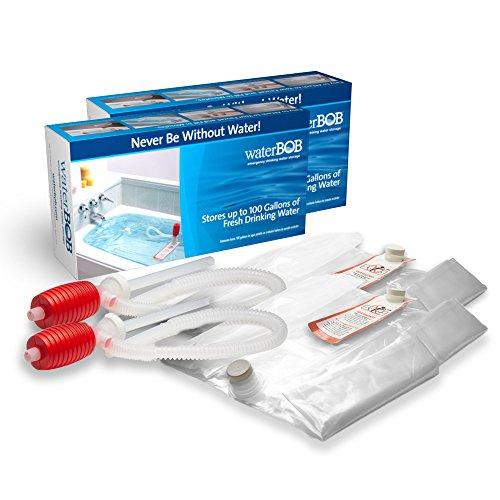
WaterBOB
WaterBOB Bathtub Emergency Water Storage
Liner that holds up to 100 gallons of tap water in a standard bathtub, with a pump to dispense into jugs. WaterBOB says it keeps water fresh for up to 16 weeks.
- Holds up to 100 gallons
- Includes a dispensing pump
- Fills in about 20 to 30 minutes
$39.00
Out of stock· checked
Temporarily out of stock. Expected availability early December.
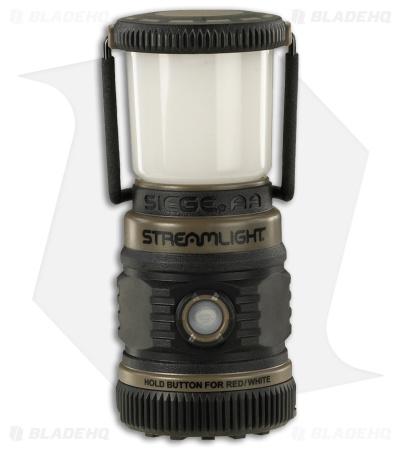
Streamlight
Streamlight The Siege Lantern (44931)
7.25-in hand lantern on three D batteries: 540 lumens for 30 hours or 55 lumens for 295 hours, plus red and SOS modes. IPX7 and it floats.
- 540 / 275 / 55 lumens; 30 / 70 / 295 hours
- 3 x D alkaline batteries (sold separately)
- IPX7, floats, 2 m impact tested
$46.82
Out of stock· checked
SOLD OUT - back in stock soon!
Midland
Midland WR120 NOAA Weather and Emergency Alert Radio (WR120B)
Tabletop NOAA weather alert radio with S.A.M.E. county programming, a 90dB siren, and AA battery backup. It sounds an alarm for warnings in your county without relying on cell or internet service.
- S.A.M.E. county-specific alerts
- 90dB siren, flashing LED, or voice alert
- 3 AA battery backup
BAND-AID
BAND-AID Brand All-Purpose Portable Compact First Aid Kit, 160 Piece
A 160-piece minor wound care kit in a refillable plastic case: bandages, gauze, cleansing wipes, antibiotic and anti-itch cream, and pain relief.
- 160 pieces of first aid supplies
- Refillable hard plastic case
- Latex-free adhesive bandages
What can wait until later?
Long-term food buckets, generators, solar setups, specialized water filters, and two-way radios can wait until the eight steps above are done. Those basics cover the disruptions most households are likely to face, and they cost far less than specialized gear.
When you are ready for more, the two-week household plan extends these basics to 14 days of sheltering at home, including cooking without power, sanitation, and temperature. The first $100, $300, and $1,000 in preparedness purchases breaks the same priorities into budget steps, and the emergency preparedness kit builder assembles a full 72-hour kit.
Get the next step by email
What changed, what it means for your household, and the one action worth taking.