Bug Out Bag List: A Go Bag Checklist for Household Evacuations
A go bag, also called a bug out bag, is a packed bag each person can grab and carry if your household has to evacuate. Pack documents, medications, cash, clothing and sturdy shoes, water and food for about three days, light, a radio, phone power, and hygiene items, and decide in advance where you will go.
By Aditya BawankuleUpdated
Disclosure: This page contains affiliate links. We may earn a commission on purchases at no cost to you. Read the disclosure
What is a go bag, and when would you use it?
A go bag is the bag you carry out the door when officials tell your area to leave. Ready.gov describes it as a bag you can carry if you evacuate on foot or by public transportation, with extra supplies in the car if you drive. The realistic uses are wildfires, hurricanes, floods, and chemical releases, when a household may have minutes to leave and days before it can return.
"Bug out bag" is the same idea under a different name. The goal is not wilderness survival; it is getting your family to a friend's home, a motel, or a shelter with the medications, documents, and basics you need for the first few days. Ready.gov also asks that everyone in the household know where the bag is stored and who is responsible for it.
How much water and food to pack
Plan for about three days. Ready.gov says a kit should cover food and water for several days, and the Red Cross is specific: one gallon of water per person per day, with a 3-day supply for evacuation and a two-week supply for home. For an evacuation that is 3 gallons per person, or 12 gallons for a family of 4.
That much water is heavy, so split it. Keep the full supply in the car if you will drive, and give each person a couple of bottles plus a filter or treatment so they can refill. For food, pack non-perishable, easy-to-prepare items such as ration bars, nut butter, and ready-to-eat meals that need no cooking. Our water storage guide and emergency food comparison cover the home side.
Go bag checklist (one per person)
Pack this list once for each person, then add the kid and pet items where they apply. It combines Ready.gov's basic supply kit, the Red Cross survival kit list, and Ready.gov's evacuation advice. Store each bag where it can be grabbed in seconds, and keep the printable evacuation checklist with it for the last-minute items.
Documents and money
- Copies of IDs, insurance policies, and bank records in a waterproof pouch, plus scans saved electronically
- Proof of address and the deed or lease to your home
- Passports and birth certificates (copies, or originals if you keep them together)
- Medication list and key medical information
- Family and emergency contact list on paper
- Cash in small bills
- Spare house and car keys
Health
- Prescription medications (the Red Cross suggests a 7-day supply) and medical items
- Pain relievers, anti-diarrhea medication, antacids
- Glasses, contact lenses, and solution; hearing aid batteries
- First aid kit
- N95 respirator for wildfire smoke and ash
Water and food
- Water bottles, plus a filter or treatment for refills
- Non-perishable, easy-to-prepare food
- Manual can opener and utensils if your food needs them
Clothing and shelter
- Complete change of clothing for your climate
- Sturdy shoes (wear them when you leave)
- Rain gear and a hat
- Emergency blanket or a warm blanket per person
- Work gloves
Light, power, and communication
- Flashlight or headlamp and extra batteries
- Battery-powered or hand-crank radio with NOAA weather alerts
- Phone, charging cable, and a charged power bank
- Whistle to signal for help
- Paper map of your area with evacuation routes marked
Hygiene and sanitation
- Moist towelettes, soap, and hand sanitizer
- Toothbrush, toothpaste, and feminine supplies
- Garbage bags and plastic ties
- Toilet paper or a tissue pack
For babies and kids
- Infant formula, bottles, diapers, wipes, and diaper rash cream
- Books, games, or puzzles
- A card in each child's bag with parents' names and phone numbers
- Comfort item small enough to carry
For pets
- Several days of food in an airtight, waterproof container
- Water and a bowl
- Extra supply of regular medicines
- Collar with ID tag, harness or leash, and a backup set
- Copies of registration and vet records, also saved electronically
- Carrier for small animals
Building the home kit at the same time? Start with the 72-hour kit checklist or the emergency preparedness kit builder.
Documents, cash, and medications
These are the items you cannot buy on the road, so pack them first. Ready.gov recommends copies of insurance policies, identification, and bank account records saved electronically or kept in a waterproof, portable container. The Red Cross adds a medication list and medical information, proof of address, the deed or lease to your home, passports, and birth certificates.
Ready.gov notes that an emergency can make it hard to refill a prescription or find an open pharmacy, and the Red Cross suggests a 7-day supply of medications. Keep cash in small bills: card readers and ATMs need power and a network. Our guide to communications and payment outages covers why.
Clothing and footwear
Wear sturdy shoes and protective clothing when you leave, and pack one complete change. Ready.gov advises long pants, long-sleeved shirts, and a hat during an evacuation, and a complete change of clothing suited to your climate plus sturdy shoes in the kit. Your evacuation route may end up being on foot, so the shoes you leave in matter more than anything in the bag.
Choosing a pack: bags compared by use
Pick each bag by who carries it and how you will leave. An adult who may walk needs a backpack big enough for clothes, medications, documents, and some food and water; around 35 liters is a practical size. Teens and lighter loads fit a 20-liter daypack. If you will drive, one large duffel for shared supplies keeps personal bags light. A prebuilt kit can fill a bag fast, but check its water: the Ready America 2-person kit holds about 51 fl oz in total, roughly 7% of the Red Cross's 3-day figure for two people.
| Bag | Volume | Empty weight | Best use |
|---|---|---|---|
| Osprey Daylite Carry-On Travel Pack 35 | 35 L (2,136 cu in) | 2.03 lb | One adult's full go bag |
| Osprey Daylite Plus 20L Backpack | 20 L (1,220 cu in) | 1.29 lb | Teens and light loads |
| Osprey Daylite Duffel 45 | 45 L (2,746 cu in) | 1.4 lb | Shared supplies by car |
| Ready America 70280 2-Person 3-Day Emergency Backpack | Backpack about 12.5 x 9 x 5 in (approx.) | Not listed | Prebuilt starting point |
Pack picks
Purchases through these links support the site at no extra cost to you. (?)
Osprey
Osprey Daylite Carry-On Travel Pack 35
35-liter, 2.03 lb travel pack with a suitcase-style full-zip opening, lockable zippers, and tuckaway straps: room for one adult's evacuation kit plus clothes.
- 35 L, 2.03 lb
- Full-zip suitcase opening
- Backpack straps tuck away
$130.00
Price checked
Osprey
Osprey Daylite Plus 20L Backpack
Light 20-liter daypack (1.29 lb) with a padded sleeve, two mesh bottle pockets, and front organization: a good per-person go bag for teens and light adult loads.
- 20 L, 1.29 lb
- Two side water bottle pockets
- Interior sleeve for a hydration reservoir or 14-inch laptop
$80.00
Price checked
Osprey
Osprey Daylite Duffel 45
45-liter, 1.4 lb duffel with backpack, shoulder, and hand-carry options and a wide U-zip opening: a household bag for shared supplies when you evacuate by car.
- 45 L, 1.4 lb
- Backpack, over-the-shoulder, or hand carry
- Padded bottom
$70.95
Price checked
Ready America
Ready America 70280 2-Person 3-Day Emergency Backpack
Low-cost prebuilt go bag for two people: two 2,400-calorie food bars, twelve 4.225 fl oz water pouches, ponchos, survival blankets, a 33-piece first aid kit, lightsticks, dust masks, and a whistle.
- Food bars and water pouches with 5-year shelf life
- 33-piece first aid kit
- Compact 12.5 x 9 x 5 in backpack
Light, power, and communication
Every bag needs its own light, and the household needs at least one radio and a way to charge phones. Ready.gov lists a battery-powered or hand-crank radio and a NOAA Weather Radio with tone alert, a flashlight, extra batteries, a whistle, and a cell phone with chargers and a backup battery. A headlamp keeps both hands free for carrying kids or bags.
Keep phones charged whenever a wildfire or storm is near, as Ready.gov advises, and keep paper copies of contacts and a local map in case the phone dies. A waterproof pouch protects documents and electronics in rain or floodwater.
Light, power, and document picks
Purchases through these links support the site at no extra cost to you. (?)
Midland
Midland ER10VP Compact Emergency Alert AM/FM Weather Radio
Pocket-size NOAA weather alert radio with AM/FM, an LED flashlight with SOS strobe, and a wrist lanyard; runs on three AA batteries, which are included.
- NOAA Weather Radio with visual and audio alerts
- AM/FM radio and LED flashlight
- 5 x 3 x 1.2 in; 3 AA batteries included
Nitecore
Nitecore NB10000 Gen4 10,000mAh Power Bank
5 oz, 10,000mAh (39Wh) power bank with two USB-C ports, 22.5W fast charging, and an IPX7 water-resistance rating: small enough for a glove box or every go bag in the house.
- 10,000mAh / 39Wh
- Two USB-C ports, 22.5W max
- IPX7 water resistant, 5 oz
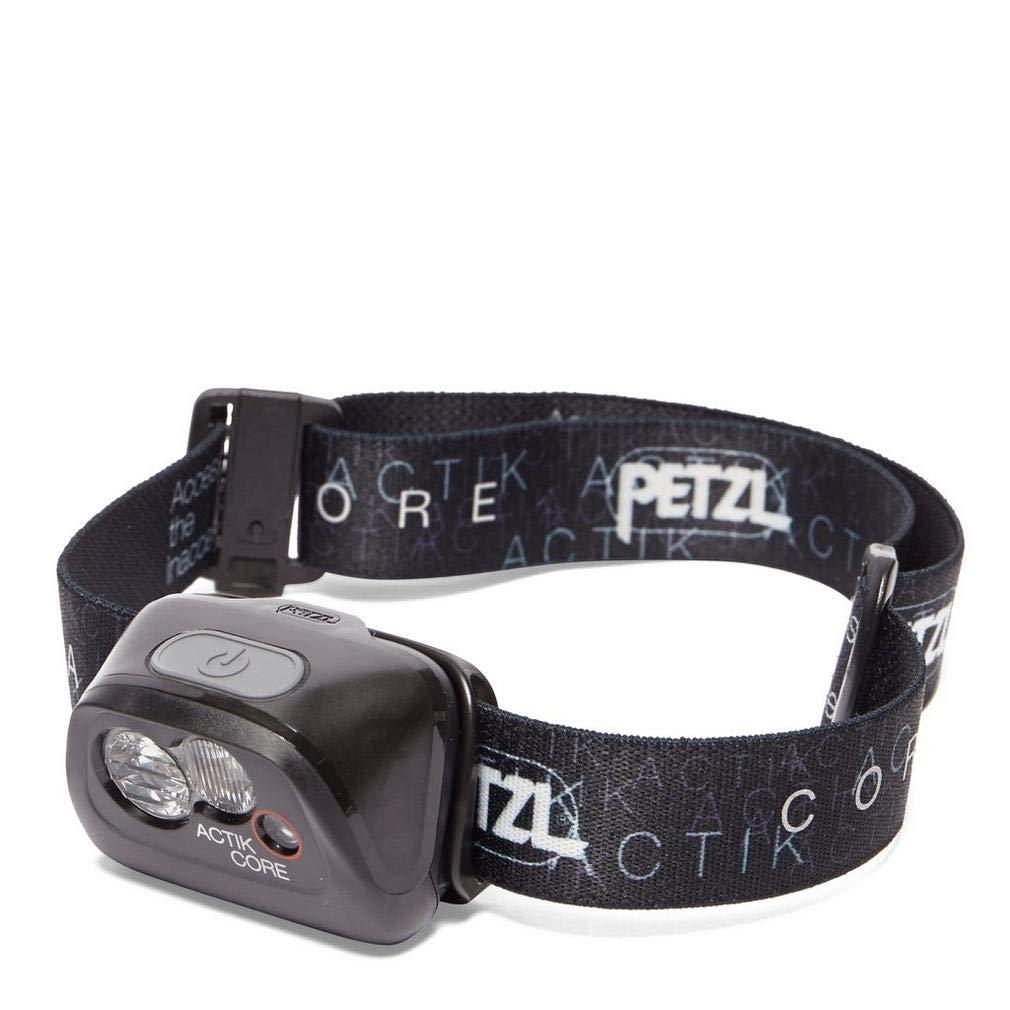
Petzl
Petzl ACTIK CORE Headlamp
625-lumen headlamp that runs on its USB-C rechargeable CORE battery or three AAA batteries. 88 g, IPX4, with a red light mode.
- 625 lumens max (450 on AAA)
- CORE rechargeable battery or 3 x AAA
- 88 g, IPX4, red lighting
$87.95
Price checked
LOKSAK
aLOKSAK Waterproof Bag 13x11 Inch (2 Pack)
Resealable waterproof bags certified to 200 feet, sized to hold letter-size documents flat. Keeps paper copies of IDs, insurance, and contact lists dry in a kit or go bag.
- Certified waterproof to 200 feet
- Inner size 12.75 x 11 inches
- Airtight resealable closure
First aid, water treatment, food, and warmth
Each bag should carry a small first aid kit, a way to treat water, food that needs no cooking, and an emergency blanket. A compact filter lets each person refill bottles at a shelter or a stream (the CDC notes portable filters do not remove viruses, so disinfect filtered water when you can), and ration bars cover calories without a stove. For the CDC's boiling times and bleach amounts, see our water storage guide.
First aid and supplies picks
Purchases through these links support the site at no extra cost to you. (?)
BAND-AID
BAND-AID Brand All-Purpose Portable Compact First Aid Kit, 160 Piece
A 160-piece minor wound care kit in a refillable plastic case: bandages, gauze, cleansing wipes, antibiotic and anti-itch cream, and pain relief.
- 160 pieces of first aid supplies
- Refillable hard plastic case
- Latex-free adhesive bandages
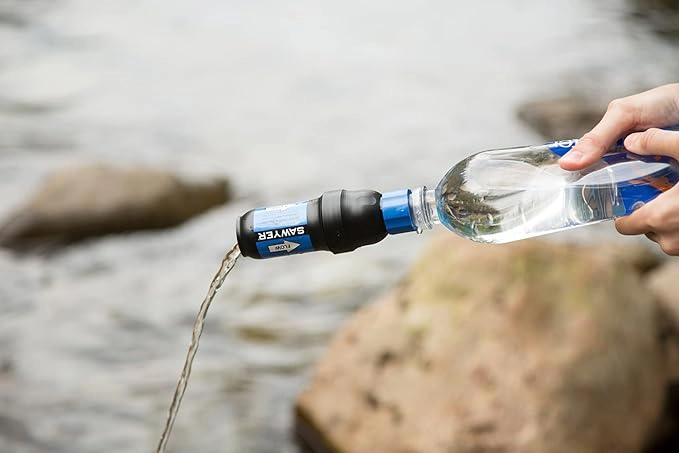
Sawyer
Sawyer Squeeze Water Filtration System
Palm-size 0.1-micron hollow fiber filter that threads onto standard 28 mm bottles. The kit adds two pouches, gravity tubing, inline adapters, and a cleaning plunger.
- 0.1 micron absolute hollow fiber membrane
- Fits standard 28 mm bottle threads
- Filter weighs 3 oz; full kit 8.19 oz
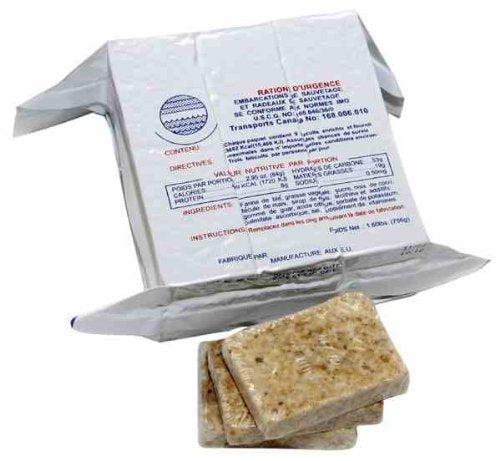
SOS
SOS Emergency Food Ration Bar (3,600 Calorie)
3,600-calorie bar split into nine 400-calorie wafers, eaten three per person per day. 5-year shelf life, U.S. Coast Guard approved, no water or cooking needed.
- Nine 400-calorie wafers (3,600 total)
- 5-year shelf life from manufacture
- Stores from -22 F to 149 F
$6.50
Backordered· checked
In stock soon. Order now to get in line. First come first served.
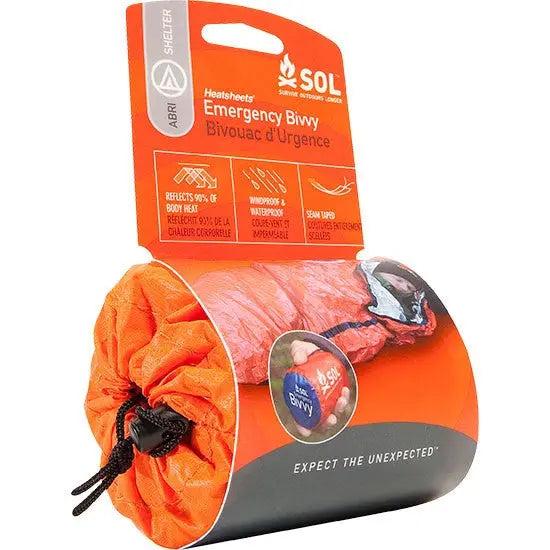
SOL
SOL Emergency Bivvy with Rescue Whistle
3.8 oz sealed reflective bivvy, 84 x 36 in, that SOL says reflects 90% of body heat. A tinder-cord drawstring and survival whistle are attached.
- Reflects 90% of body heat (SOL)
- Waterproof, windproof, sealed seams
- 3.8 oz, 84 x 36 in
$24.49
Price checked
Kids and pets
Pack for children and pets as if they were adults with special requirements. Ready.gov lists infant formula, bottles, diapers, wipes, and diaper rash cream, plus books, games, or puzzles for children. It also suggests practicing your evacuation plan with kids, teaching them how to reach an emergency contact, and agreeing on a family meeting place and a family password.
For pets, Ready.gov recommends a lightweight evacuation kit separate from the larger shelter-in-place kit: several days of food in an airtight, waterproof container, water and a bowl, extra medicine, a collar with ID tag and a leash with backups, and copies of registration records. Most public shelters allow only service animals, so line up a pet-friendly place to stay and a neighbor or friend who can evacuate your pets if you are not home. Ready.gov also recommends microchipping and keeping the contact details current.
Wildfire, hurricane, flood, and chemical-release evacuations
The same go bag works for each hazard, with a few additions and different rules for leaving. A wildfire adds N95 respirators, which the EPA says significantly reduce exposure to smoke particles when worn correctly. A chemical release is different: Ready.gov says the protective action is to leave immediately if told to evacuate, or to shelter in place if told to stay indoors, and to follow local instructions on the radio or TV. To find a public shelter, Ready.gov says you can text SHELTER and your ZIP code to 43362.
| Evacuation | Pack or prepare | When you leave |
|---|---|---|
| Wildfire | N95 respirators for smoke; backup charging; first aid kit in the go bag or trunk | Leave as soon as authorities tell you to; keep your phone charged when fires are nearby |
| Hurricane | Know your evacuation zone and route; full tank when an evacuation seems likely | Leave early enough to avoid being trapped by the storm; follow recommended routes, not shortcuts |
| Flood | Waterproof pouches for documents and electronics; dry clothes | Never drive through flooded areas: six inches of water can stall a car and a foot can float many |
| Chemical release | Radio for instructions; a car kept fueled; your go bag by the door | Go immediately if told to evacuate; move upwind; in a car, close windows and vents and turn off the A/C and heater |
Make a household evacuation plan
A bag without a plan only helps you leave; the plan decides where you go and how you find each other. Ready.gov's plan steps start with four questions: how you will get alerts, where you will shelter, what your evacuation route is, and how your household will communicate. Write the answers on Ready.gov's fillable family emergency plan and put a copy in every bag.
| Plan item | What to decide now |
|---|---|
| Destinations | Two or three places to go, in different directions: a friend's home in another town, a motel, or a public shelter |
| Routes | Your state or county evacuation route plus at least one alternate; how you will leave without a car |
| Meeting places | One spot near home and one outside the neighborhood in case you are separated |
| Contacts | An out-of-state contact everyone calls or texts; a written contact list in every bag |
| Responsibilities | Who grabs which bag, who gets the kids or pets, who checks on neighbors who may need a ride |
| Alerts | Local emergency alerts, National Weather Service alerts, and the FEMA app on every phone |
| Pets | A pet-friendly place to stay and a buddy who can evacuate your pets if you cannot |
If you have a car, Ready.gov recommends keeping at least a half tank of gas at all times, filling up when an evacuation seems likely, and taking one car per family to reduce congestion. When you go, and if time allows: call your out-of-state contact, lock up, unplug small electronics, leave the refrigerator and freezer on unless flooding is a risk, leave a note saying where you went, and check on neighbors. Our car emergency kit checklist covers what should already be in the vehicle.
Keep the bag ready
Check each bag at least once a year and whenever your household changes. Ready.gov says to replace expired items and rethink your needs every year. Swap clothes as kids grow and seasons change, rotate food, water, and medications before they expire, test lights and the radio, recharge power banks, and update document copies and contact lists.
Get evacuation and kit checklists by email
Seasonal go bag checks, what changed in official guidance, and what is worth doing about it.