Preparing for disruptions to communications and digital payments
When power or networks fail, card payments, ATMs, payment apps, phones, deliveries, and online news can all stop at once. A household that keeps small bills, paper copies of contacts and documents, a battery radio, and a simple plan for reaching each other can ride out the gap, whatever caused it.
By Aditya BawankuleUpdated
Disclosure: This page contains affiliate links. We may earn a commission on purchases at no cost to you. Read the disclosure
What stops working when networks or power fail
Almost everything digital depends on two things at once: electricity and a working network. Lose either one at the store, the bank, the cell tower, or the provider's data center, and card readers, ATMs, payment apps, calls, and online orders can all stop together. Ready.gov puts it plainly: ATMs and credit cards may not work during a disaster.
The failures are not all-or-nothing. Texts may get through when calls do not. One carrier may be down while another works. A store with a generator may still be open but able to take only cash. Plan for the common case, a few hours to a few days of patchy service, and the same steps cover the rarer long outage.
| System | Depends on | Plan |
|---|---|---|
| Card readers and checkout | Store power plus a working payment network connection | Small bills for essentials; expect cash-only or closed stores |
| ATMs | Power and a connection to the bank network | Withdraw cash before you need it, not during the outage |
| Payment apps and online banking | A charged phone and data service | Treat them as unavailable until service returns |
| Cell calls, texts, and data | Powered towers, carrier core network, and spare capacity | Short calls, texts first, a paper contact list |
| Home internet and internet phone service | Power at home and along the provider's network | Check whether your home phone works without power |
| Deliveries and online orders | Ordering, payment, and dispatch systems plus fuel and roads | A two-week home supply so you are not waiting on a truck |
| News, alerts, and maps on your phone | Cell or internet service and battery | A battery radio for NOAA and AM/FM; a paper map |
Outage or cyberattack: what to believe in the first hours
In the first hours of a big outage, nobody outside the affected company usually knows the cause, so treat early claims of a cyberattack as unconfirmed. Many of the largest disruptions in recent years were ordinary technical failures, and the right household response is the same whatever the cause.
Two well-documented examples: on February 22, 2024, AT&T's nationwide wireless outage lasted at least 12 hours and blocked more than 92 million calls, including more than 25,000 attempts to reach 911. The FCC's investigation found it began when an employee implemented a network change with an equipment configuration error. On July 19, 2024, a faulty CrowdStrike content update crashed Windows computers running its security software in a widespread IT outage. CISA stated the outage was due to the update and not to malicious cyber activity.
Cyberattacks on infrastructure do happen, and federal agencies say so when they have evidence. The useful habit is to wait for the company involved or an agency such as CISA or the FBI to confirm a cause, and to avoid forwarding rumors that tie up networks and attention.
Keep cash on hand, in small bills
Keep a modest amount of cash at home in small bills. Ready.gov's financial preparedness guidance says to keep a small amount of cash at home in a safe place, and that small bills matter because ATMs and credit cards may not work during a disaster when you need to buy supplies, fuel, or food.
Ready.gov does not name an amount. Size it to a few days of essentials for your household: a tank of fuel, groceries, and any medication copays. Small bills matter because a seller in an outage may have no way to make change. Split the cash between your home kit and a go bag, and replace worn bills once a year.
Two related steps from the same guidance: if you receive Social Security or other federal benefits, direct deposit or a Direct Express prepaid card protects you if mail service is disrupted for days or weeks. And expect scams after any disruption; the government will not call, text, or message you on social media about owing money or receiving payments.
Keep offline copies of documents and contacts
Write down the phone numbers you would need if your phone died or your accounts were unreachable, and keep paper copies of key documents in a waterproof bag. Most people no longer know family phone numbers by heart, and a dead phone takes the whole contact list with it.
Ready.gov's Make a Plan page asks every household to settle how it will receive alerts and how it will contact one another and reconnect if separated, and offers a fillable Family Emergency Plan form for names, contacts, meeting places, and medical information. Print it. Add an out-of-area contact everyone can check in with, your doctor and pharmacy, your insurance policy numbers and claims lines, and your bank's phone number.
Copy driver's licenses or passports, insurance cards, prescriptions, and the deed or lease. Keep one set in the home kit and one in a go bag or vehicle. The evacuation checklist lists the documents worth carrying if you have to leave.
Document protection
Purchases through these links support the site at no extra cost to you. (?)
LOKSAK
aLOKSAK Waterproof Bag 13x11 Inch (2 Pack)
Resealable waterproof bags certified to 200 feet, sized to hold letter-size documents flat. Keeps paper copies of IDs, insurance, and contact lists dry in a kit or go bag.
- Certified waterproof to 200 feet
- Inner size 12.75 x 11 inches
- Airtight resealable closure
Get information without the internet: NOAA Weather Radio, AM/FM, and alerts
A battery-powered radio that receives NOAA Weather Radio and AM/FM is the most reliable way to get official information when phones and internet are down, because it depends on broadcast transmitters rather than your carrier or provider.
NOAA Weather Radio, the National Weather Service's own network, has more than 1,000 transmitters covering all 50 states, adjacent coastal waters, Puerto Rico, the U.S. Virgin Islands, and the U.S. Pacific territories. It broadcasts on seven VHF frequencies from 162.400 to 162.550 MHz, so you need a radio or scanner that receives that band. Working with the Emergency Alert System, it carries warnings for all hazards, not just weather: chemical releases, AMBER alerts, and 911 telephone outages among them.
Local AM and FM stations also carry Emergency Alert System messages, which state and local authorities commonly use for weather and AMBER alerts. Wireless Emergency Alerts, the loud alerts on your phone, are free and need no sign-up, but the FCC notes they reach you only if your phone is on, out of airplane mode, and connected to a tower of a participating carrier. In a cell outage, that last condition fails.
For home, a tabletop alert radio with S.A.M.E. county programming wakes you for warnings in your county. For the kit, a portable radio with a hand crank, solar panel, or replaceable batteries covers a long outage.
Radios for alerts and news
Purchases through these links support the site at no extra cost to you. (?)
Midland
Midland WR120 NOAA Weather and Emergency Alert Radio (WR120B)
Tabletop NOAA weather alert radio with S.A.M.E. county programming, a 90dB siren, and AA battery backup. It sounds an alarm for warnings in your county without relying on cell or internet service.
- S.A.M.E. county-specific alerts
- 90dB siren, flashing LED, or voice alert
- 3 AA battery backup
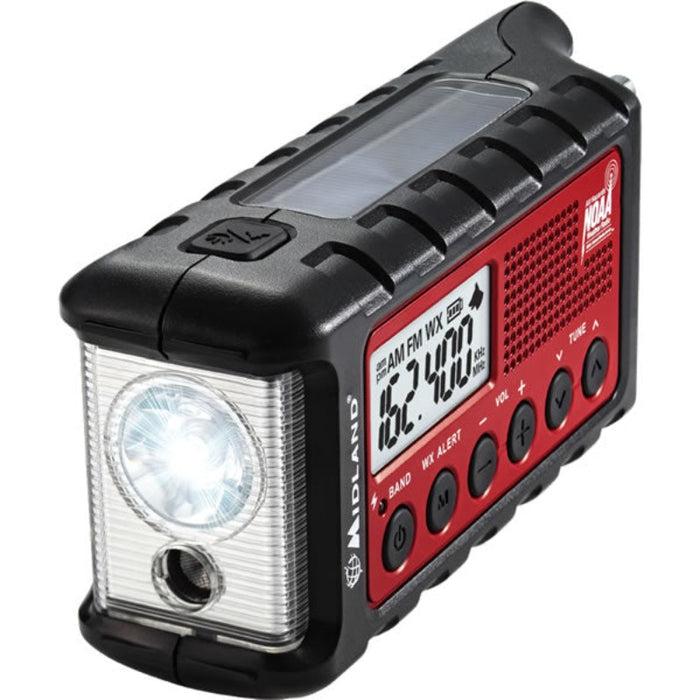
Midland
Midland ER310 Portable Emergency Crank Weather Radio
AM/FM/NOAA weather alert radio with a 3500 mAh rechargeable battery rated for up to 45 hours, solar and hand-crank charging, a 6 x AA backup, and a Cree LED flashlight.
- NOAA weather alerts plus AM/FM
- 3500 mAh battery, up to 45 hours of normal use
- Solar, hand crank, and 6 x AA backup (AA not included)
$89.99
Out of stock· checked
High demand! The ER310 is temporarily out of stock. We expect it back soon.
Text, don't call, when the network is congested
When the network is overloaded, send a text instead of calling. The FCC's guidance for communicating in an emergency says that in many cases a text message will go through when a call will not, and texting frees capacity for emergency calls.
The rest of the FCC's advice is worth practicing before you need it:
- Limit non-emergency calls, and keep any call brief.
- Wait 10 seconds before redialing so the network can clear the last attempt.
- If one method fails, try another: text, email, or a landline if you have one.
For 911, the order flips. The FCC says to make a voice call to 911 whenever possible, because it gives the call center more information. Text-to-911 is available only in some areas; where it is not, your carrier must send an automatic bounce-back message telling you to call instead.
Two-way radios: FRS, GMRS, and amateur radio
FRS walkie-talkies are the simplest way for a household to stay in touch across a neighborhood when phones are down, and they need no license. GMRS and amateur radio reach farther but require an FCC license before you transmit.
FRS radios share 22 channels with GMRS. The FCC says the usual range on FRS channels 8 to 14 is less than half a mile, with longer range possible on channels 1 to 7 and 15 to 22 depending on conditions. Treat the maximum range printed on the box as a best case: Midland's own FRS radio manual says it applies over water, in open rural areas, or on flat ground where you can see the other person. GMRS users can expect one to 25 miles depending on station type, terrain, and repeater use, according to the FCC.
| Service | License | Key rules |
|---|---|---|
| FRS (Family Radio Service) | None. Licensed by rule | 22 shared channels; small handhelds; FCC-certified, unmodified radios only |
| GMRS (General Mobile Radio Service) | FCC license required to transmit | Apply online at 18 or older; 10-year term; covers the licensee's immediate family |
| Amateur (ham) radio | FCC license required to transmit | Pass an exam given by volunteer examiners; most people start at Technician class |
| NOAA Weather Radio, AM/FM | None (receive only) | Listening needs no license; NOAA needs a radio that receives the weather band |
Agree on a channel and a check-in time in advance, and write both on your contact list. Radios that run on AA or AAA batteries as a backup to their rechargeable packs keep working after the packs are spent.
Amateur radio is a deeper commitment: you study for and pass an exam given by volunteer examiners, and your license class sets which bands you may use. A low-cost dual-band handheld is a common first radio, and anyone can use one to listen. Transmit only on bands your license covers, and use FCC-certified FRS or GMRS radios for family channels.
Two-way radios
Purchases through these links support the site at no extra cost to you. (?)
Midland
Midland T51 X-Talker FRS Walkie Talkie 2-Pack (T51VP3)
License-free FRS two-way radio pair with 22 channels, NOAA weather alert, and AAA battery backup. A simple way to keep a household in touch across a neighborhood when phones are down.
- FRS: no license required
- 22 channels, 38 privacy codes
- NOAA weather radio and alert
Midland
Midland GXT1000 GMRS Walkie Talkie 2-Pack (GXT1000VP4)
Entry-level GMRS handheld pair with 50 channels, 142 privacy codes, and NOAA weather alert. GMRS use requires an FCC license, which covers the licensee's immediate family.
- GMRS handheld radios
- 50 channels, 142 privacy codes
- NOAA weather alert radio
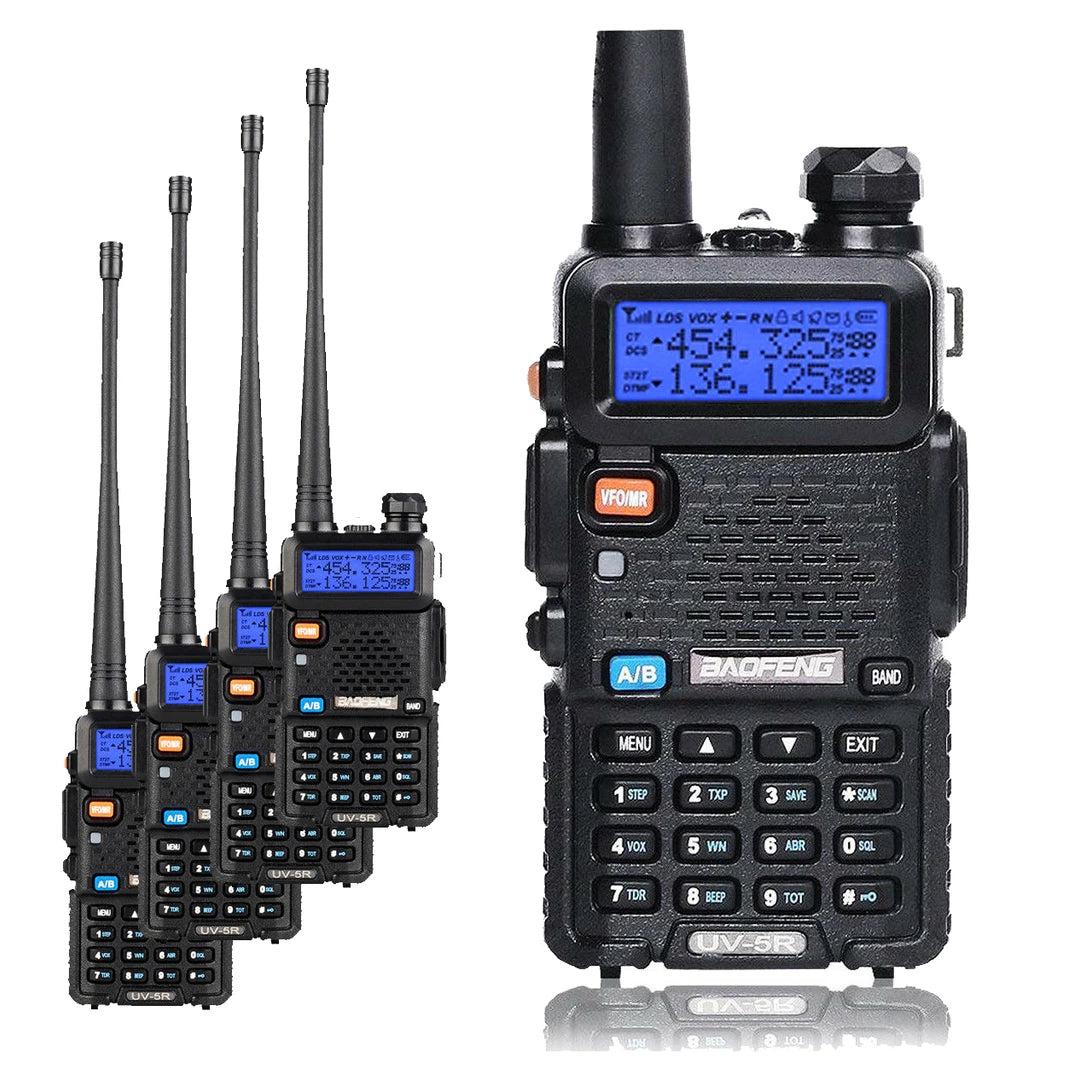
Baofeng
Baofeng UV-5R Dual Band Radio
VHF/UHF handheld that receives 136-174 and 400-520 MHz plus FM broadcast and NOAA weather. Listening needs no license; transmitting on amateur frequencies needs an FCC license.
- Receives 136-174 / 400-520 MHz
- 128 channels; supports CHIRP programming
- 1800 mAh battery (Baofeng chart)
$29.99
In stock· checked
Keep phones, radios, and lights powered
Keep a charged power bank for each phone you depend on, and standardize your radios and lights on AA and AAA batteries so one stock of spares covers everything. Ready.gov's power outage guidance starts with an inventory of what you rely on that needs electricity, then a plan for batteries and alternatives such as a portable charger or power bank, and a flashlight for every household member.
Lithium power banks slowly lose charge in storage, so top them up every few months and write the date on a piece of tape. Phones last longer in an outage with the screen dimmed and apps closed. If you run a generator, Ready.gov says to use it only outdoors and at least 20 feet from windows, and to install carbon monoxide detectors with battery backup on every level of the home.
Power and light
Purchases through these links support the site at no extra cost to you. (?)
Nitecore
Nitecore NB10000 Gen4 10,000mAh Power Bank
5 oz, 10,000mAh (39Wh) power bank with two USB-C ports, 22.5W fast charging, and an IPX7 water-resistance rating: small enough for a glove box or every go bag in the house.
- 10,000mAh / 39Wh
- Two USB-C ports, 22.5W max
- IPX7 water resistant, 5 oz
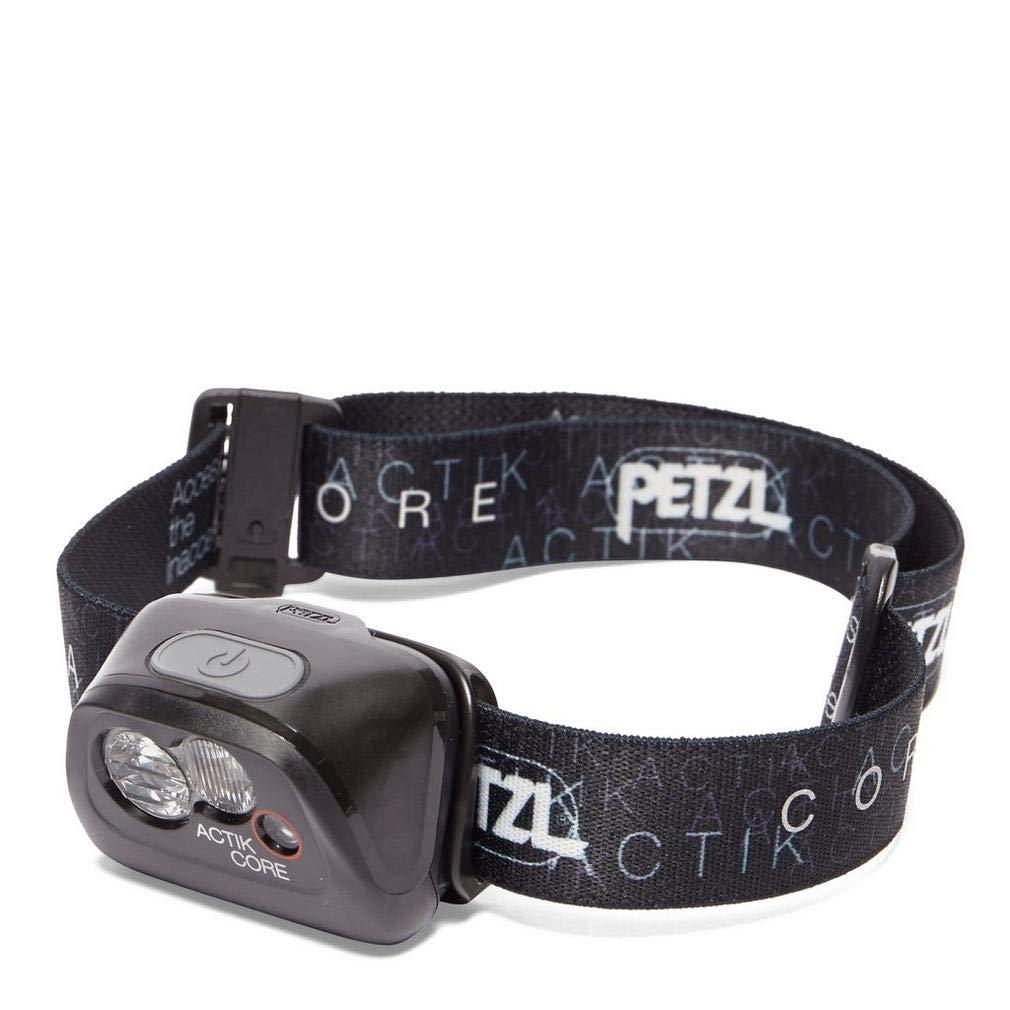
Petzl
Petzl ACTIK CORE Headlamp
625-lumen headlamp that runs on its USB-C rechargeable CORE battery or three AAA batteries. 88 g, IPX4, with a red light mode.
- 625 lumens max (450 on AAA)
- CORE rechargeable battery or 3 x AAA
- 88 g, IPX4, red lighting
$87.95
Price checked
Energizer
Energizer WeatheReady PRO-360 LED Camping Lantern
Battery-powered 360-degree LED area lantern rated at 500 lumens that runs on either three D or three AA batteries, with IPX4 water resistance.
- 500 lumens on high
- 360-degree area light
- Runs on 3 D or 3 AA batteries
Keep a paper map
Keep a paper road map of your region in the car and mark at least two routes out of your area. Phone maps often need data to load or reroute, and an outage, a dead battery, or a closed road can leave you guessing.
Download offline maps for your area on each phone as a second layer, and practice your routes once. The car emergency kit checklist covers what else belongs in the vehicle.
Plan for deliveries and stores to pause
Keep enough food, water, and medication at home that a few days without deliveries or open stores is an inconvenience rather than a crisis. Online orders, grocery delivery, and pharmacy refills all depend on the same ordering, payment, and dispatch systems that fail in an outage.
The two-week household preparedness plan sets the targets, and emergency food buckets vs. a grocery-store reserve compares the two ways to build the food side. Refill prescriptions before they run low, not on the last day.
A one-afternoon outage checklist
Most of this takes an afternoon and costs little. Work down the list, then put a reminder on your calendar to check cash, batteries, and contacts twice a year.
| Task | Where it goes |
|---|---|
| Set aside cash in small bills | Home kit, split with a go bag |
| Print a contact list with phone numbers and an out-of-area contact | Wallet, kit, and car |
| Copy IDs, insurance, prescriptions, and account phone numbers on paper | Waterproof bag in the kit |
| Put a battery radio that receives NOAA and AM/FM in the house | Kitchen or bedroom |
| Check that Wireless Emergency Alerts are on in your phone settings | Each phone in the household |
| Charge and date a power bank; stock spare AA and AAA cells | Kit, checked every few months |
| Pick a meeting place and a radio channel if you use FRS or GMRS | Written on the contact list |
| Buy a paper road map of your region and mark two routes out | Car glove box |
New to this? Start with how to start prepping, then build a kit with the 72-hour kit checklist.
Get outage readiness updates by email
What changed, what it means for your household, and what is worth doing about it.