Emergency Preparedness Kit: Complete Checklist with Budget, Mid-Range, and Premium Builds
An emergency preparedness kit covers water, food, first aid, light, communication, fire, tools, and power for at least several days without outside help. Build yours with the kit builder below, at a budget, mid-range, or premium tier.
By Aditya BawankuleUpdated
Disclosure: This page contains affiliate links. We may earn a commission on purchases at no cost to you. Read the disclosure
What goes in an emergency preparedness kit?
A basic emergency kit holds the supplies your household needs to get by on its own for several days: water, non-perishable food, a radio, a flashlight, a first aid kit, extra batteries, and a way to charge a phone. That is the federal Ready.gov list, which notes that after an emergency you may need to survive on your own for several days.
Ready.gov sets water at one gallon per person per day for several days, for drinking and sanitation, and food at a several-day supply of non-perishable items. Its basic list also includes a whistle, a dust mask, plastic sheeting and duct tape, moist towelettes and garbage bags, a wrench or pliers for shutting off utilities, a manual can opener, and local maps. This guide groups those supplies into categories and names specific products for each, at three budget tiers.
Build your kit
Pick a scenario and a budget tier to generate a kit with specific product picks. Toggle items on or off, then print or share your checklist. Prices change often; the product cards in each section below show the latest checked price.
Select Your Scenario
Want a blank version to fill in by hand? Use the printable checklists.
Get kit checklists and gear picks by email
Seasonal kit audits, water and food storage, and readiness checklists sent to your inbox.
Water filtration and storage
Water comes first: Ready.gov recommends one gallon per person per day for several days, for drinking and sanitation. Store what you can, then add a filter and purification tablets so you can make more water safe once the stored supply runs low.
The Sawyer Squeeze is the most versatile pick. Its 0.1-micron hollow fiber filter, which Sawyer says removes 99.99999% of bacteria and 99.9999% of protozoa, threads onto standard 28 mm bottles, and the kit adds pouches, gravity tubing, and inline adapters. The LifeStraw Personal is a cheaper drink-through straw rated for up to 1,000 gallons, but it cannot fill a pot or bottle, which makes it a backup.
Filters handle bacteria and protozoa, not viruses: CDC notes that portable microfilters do not reliably remove viruses. Katadyn Micropur MP1 tablets use chlorine dioxide, which CDC says kills Cryptosporidium when the instructions are followed, and Katadyn says they are effective against viruses too. For shelter-in-place, a WaterBOB liner holds up to 100 gallons of tap water in the bathtub, filled before the supply is cut off.
Water picks
Purchases through these links support the site at no extra cost to you. (?)
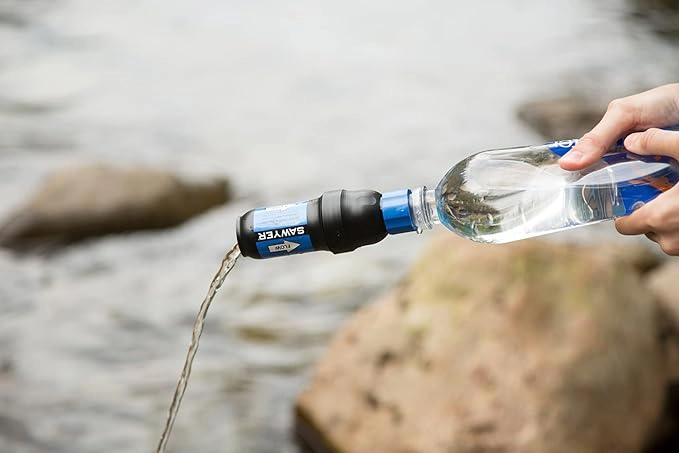
Sawyer
Sawyer Squeeze Water Filtration System
Palm-size 0.1-micron hollow fiber filter that threads onto standard 28 mm bottles. The kit adds two pouches, gravity tubing, inline adapters, and a cleaning plunger.
- 0.1 micron absolute hollow fiber membrane
- Fits standard 28 mm bottle threads
- Filter weighs 3 oz; full kit 8.19 oz
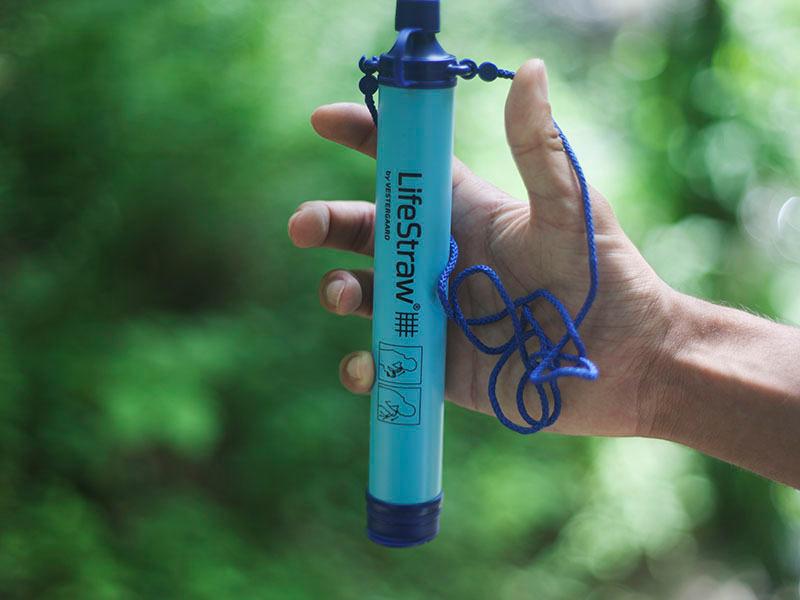
LifeStraw
LifeStraw Personal Water Filter Straw
Straw-style 0.2-micron filter rated for up to 1,000 gallons (4,000 liters). Weighs 1.6 oz and has unlimited shelf life when unused and stored properly.
- 0.2 micron membrane microfilter
- Up to 1,000 gallons / 4,000 liters
- 1.6 oz (46 g), 9 x 1.2 in
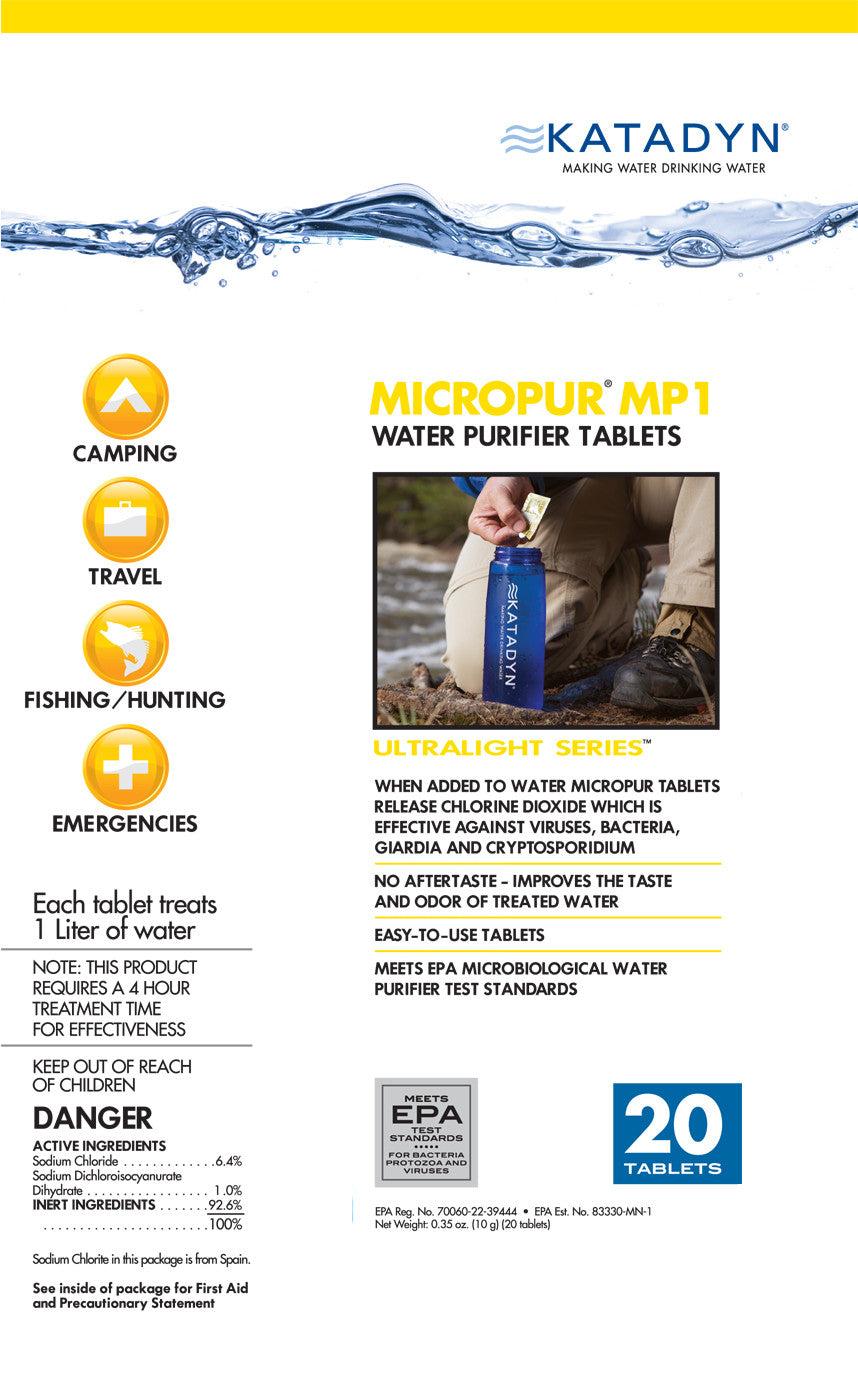
Katadyn
Katadyn Micropur MP1 Water Purifier Tablets (30 Tab)
Chlorine dioxide tablets for tap or clear water. One tablet treats 1 liter with a 4-hour exposure time, so the 30-tablet pack treats up to 30 liters.
- 30 tablets, 1 liter each
- Effective against bacteria, protozoa, cysts, and viruses (Katadyn)
- 4-hour exposure time
$17.95
Backordered· checked
Available for backorder.
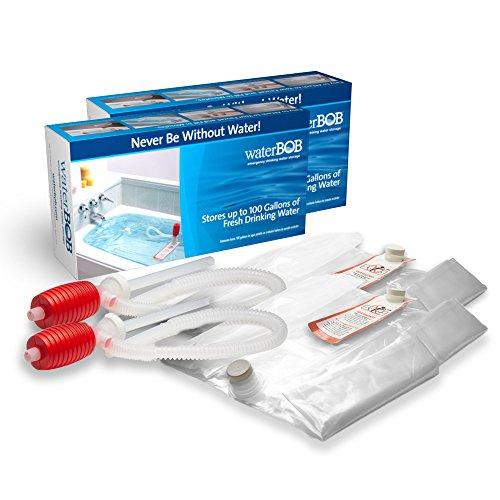
WaterBOB
WaterBOB Bathtub Emergency Water Storage
Liner that holds up to 100 gallons of tap water in a standard bathtub, with a pump to dispense into jugs. WaterBOB says it keeps water fresh for up to 16 weeks.
- Holds up to 100 gallons
- Includes a dispensing pump
- Fills in about 20 to 30 minutes
$39.00
Out of stock· checked
Temporarily out of stock. Expected availability early December.
Emergency food supply
Emergency food should keep for years and need little or no preparation. Ration bars need nothing at all; freeze-dried meals taste better but need hot water. Most kits benefit from some of each.
An SOS Emergency Food Ration bar holds nine 400-calorie wafers, and SOS lists three wafers per person per day, so one bar covers one person for about three days with no water or cooking. It has a 5-year shelf life and stores from -22 F to 149 F, which suits a car. Mountain House's Just in Case... 3 Day kit packs nine freeze-dried pouches (18 servings), and its 14-day kit packs 42 pouches (84 servings), both backed by a 30-year taste guarantee. Budget the water: the 14-day kit takes 56 cups (14 L) to rehydrate.
A compact stove heats that water. The Jetboil Flash boils half a liter in about two minutes, according to Jetboil. Use it outdoors only: CDC warns never to use a portable gas camp stove indoors because of carbon monoxide.
Food and cooking picks
Purchases through these links support the site at no extra cost to you. (?)
Mountain House
Mountain House Just in Case... 3 Day Emergency Food Supply
Nine freeze-dried pouches (18 servings) covering breakfast, lunch, and dinner for one person for 72 hours. Mountain House puts it at approx. 1,706 calories per day.
- 9 pouches, 18 servings
- Approx. 1,706 calories per day (Mountain House)
- 12 cups of water to rehydrate; 3.6 lb kit
$99.99
Out of stock· checked
Sold Out
Mountain House
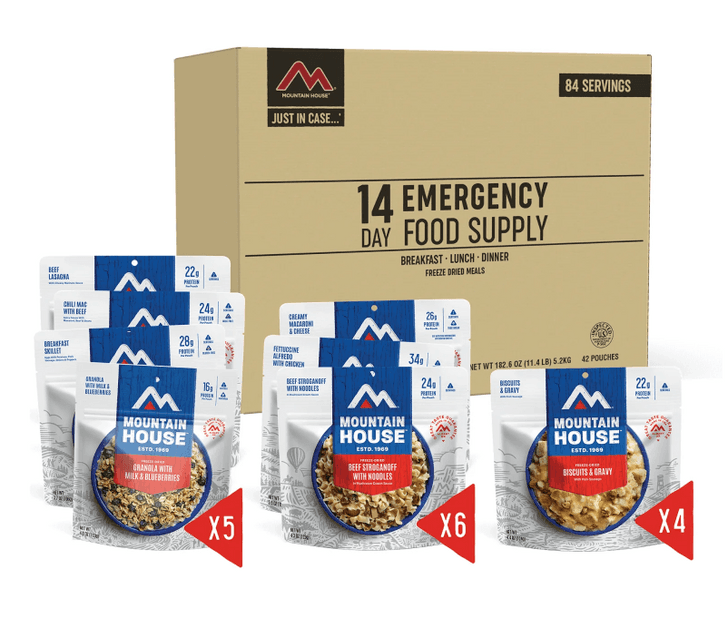
Mountain House 14-Day Emergency Food Supply
42 pouches, 84 servings: breakfast, lunch, and dinner for one person for two weeks. Mountain House puts it at approx. 1,719 calories per day.
- 42 pouches, 84 servings
- Approx. 1,719 calories per day (Mountain House)
- 56 cups (14 L) of water to rehydrate; 15.62 lbs
$457.99
Out of stock· checked
Sold Out
SOS
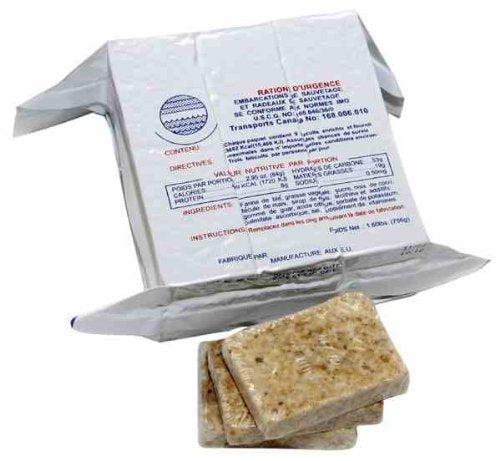
SOS Emergency Food Ration Bar (3,600 Calorie)
3,600-calorie bar split into nine 400-calorie wafers, eaten three per person per day. 5-year shelf life, U.S. Coast Guard approved, no water or cooking needed.
- Nine 400-calorie wafers (3,600 total)
- 5-year shelf life from manufacture
- Stores from -22 F to 149 F
$6.50
Backordered· checked
In stock soon. Order now to get in line. First come first served.
Jetboil
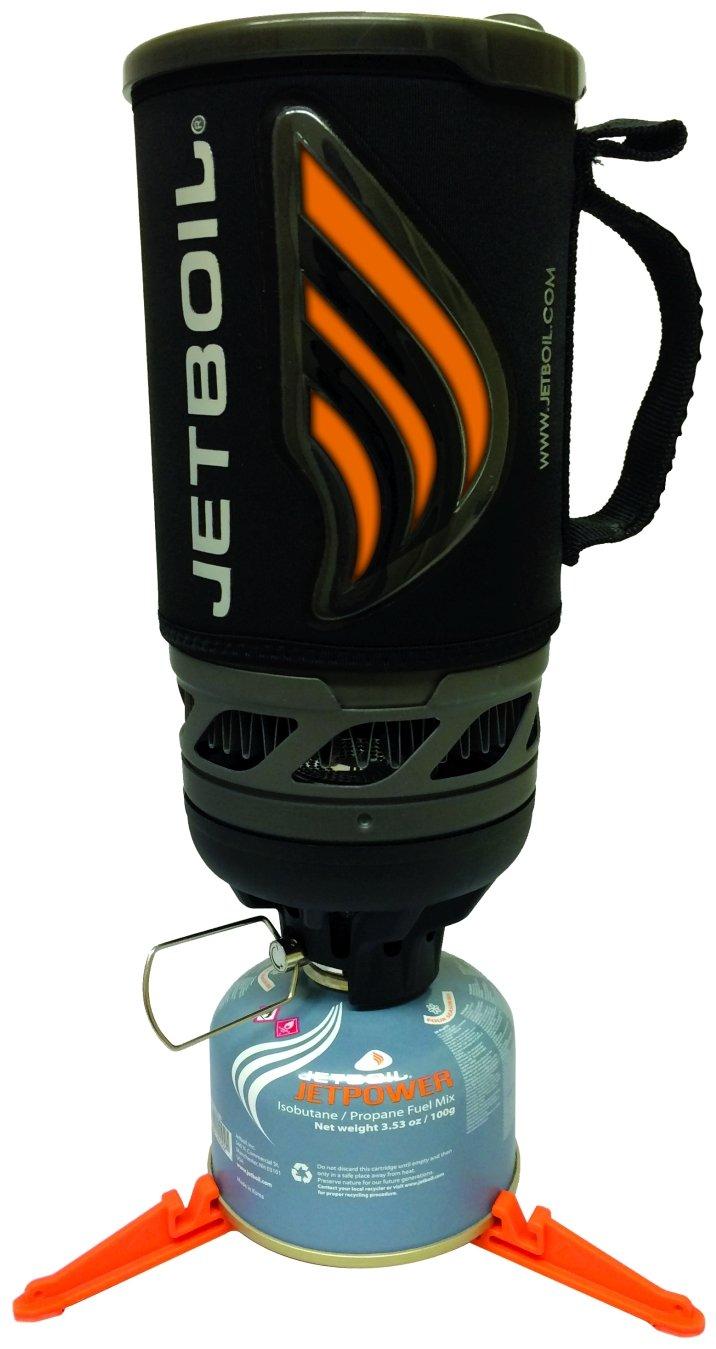
Jetboil Flash 1.0L Fast Boil System
Integrated 1-liter stove and pot with a turn-and-click igniter. Jetboil rates it at about 120 seconds per 0.5 liter and 10 liters boiled per 100 g fuel canister.
- 1.0 L FluxRing pot with insulating cozy
- About 120 sec per 0.5 L (Jetboil average)
- Turn-and-click ignition; 13.1 oz without fuel
$108.74
Price checked
First aid and trauma kits
A household kit needs two kinds of medical supplies: a standard first aid kit for everyday injuries such as cuts, scrapes, and minor burns, and a trauma kit for severe bleeding. The American College of Surgeons calls bleeding the number one cause of preventable death after injury.
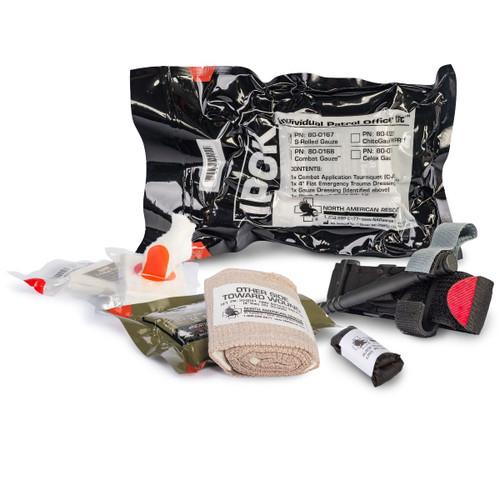
The North American Rescue IPOK is a compact, vacuum-sealed bleeding control kit with a C-A-T tourniquet, wound packing gauze, and a 4-inch emergency trauma dressing. The NAR M-FAK adds a HyFin Vent Compact chest seal twin pack in a mountable clamshell pouch. For everyday injuries, a stocked general kit such as BAND-AID's 160-piece kit covers bandages, gauze, and basic medications.
Gear works best with training. The ACS Stop the Bleed program teaches the basic actions to control severe bleeding and lists courses on its site; practice with your own kit so the steps are familiar.
First aid picks
Purchases through these links support the site at no extra cost to you. (?)
North American Rescue
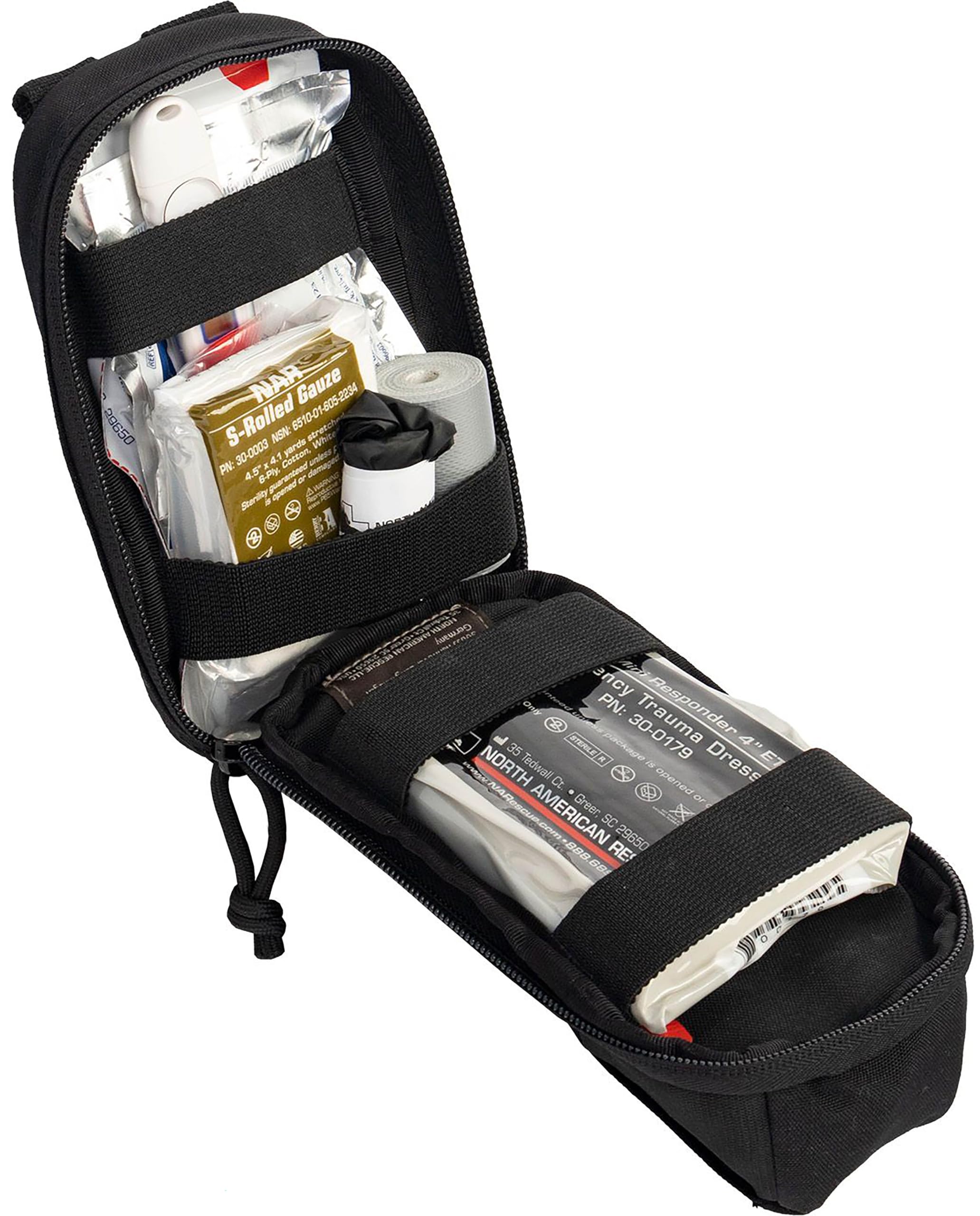
North American Rescue M-FAK Mini First Aid Kit
Half-size clamshell trauma kit. The BLS pack-out holds a C-A-T tourniquet, a 4 in. Flat ETD, S-rolled gauze, a HyFin Vent Compact chest seal twin pack, and gloves.
- C-A-T tourniquet plus HyFin Vent Compact chest seals
- 500D nylon clamshell pouch, mounts vertically or horizontally
- 6 x 3 x 3 in, 13 oz
North American Rescue
North American Rescue Individual Patrol Officer Kit (IPOK)
Vacuum-sealed bleeding control kit with a C-A-T tourniquet, wound packing gauze, a 4 in. Flat ETD trauma dressing, and nitrile gloves. 7.4 oz.
- C-A-T (Combat Application Tourniquet)
- Wound packing gauze and 4 in. Flat ETD dressing
- Vacuum sealed, 4 x 6.5 x 2.75 in, 7.4 oz
BAND-AID
BAND-AID Brand All-Purpose Portable Compact First Aid Kit, 160 Piece
A 160-piece minor wound care kit in a refillable plastic case: bandages, gauze, cleansing wipes, antibiotic and anti-itch cream, and pain relief.
- 160 pieces of first aid supplies
- Refillable hard plastic case
- Latex-free adhesive bandages
Flashlights, headlamps, and lanterns
A good lighting setup has three parts: a flashlight for moving around, a headlamp for hands-free work, and a lantern that lights a whole room. Ready.gov recommends flashlights for every household member during a power outage.
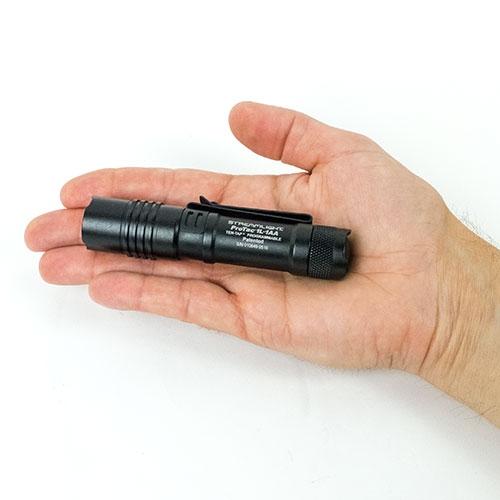
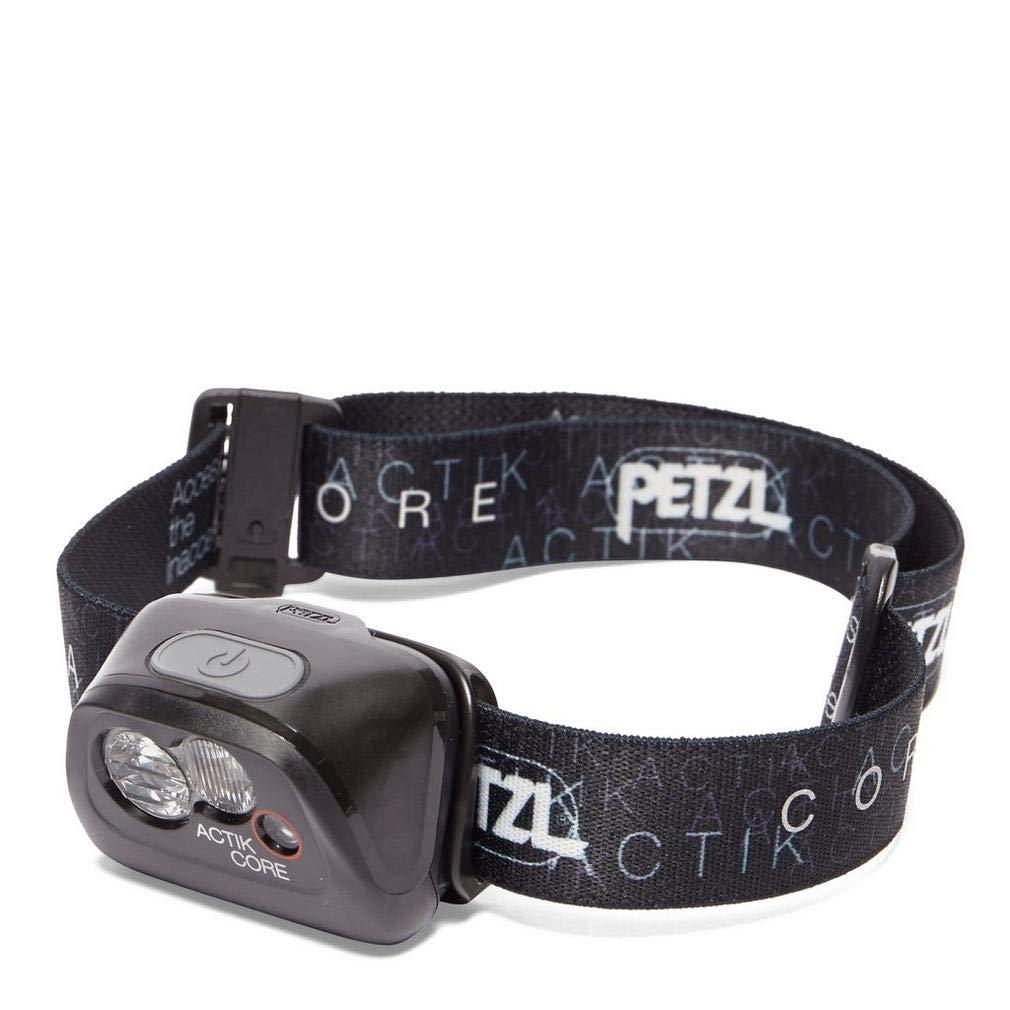
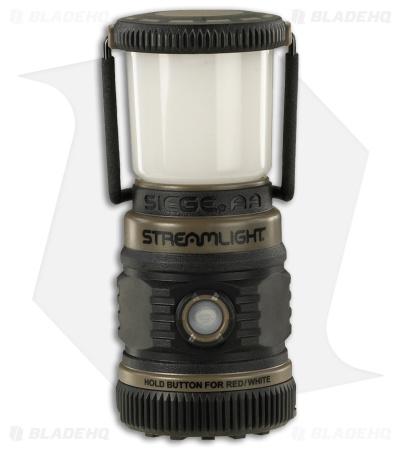
The Streamlight ProTac 1L-1AA accepts one CR123A (350 lumens) or one AA (150 lumens), and both batteries come in the box, so it keeps working with whatever batteries you can find. The Petzl ACTIK CORE headlamp runs on its rechargeable battery or three AAA batteries. For home outages, the Streamlight Siege lantern runs up to 295 hours on low from three D batteries.
Lighting picks
Purchases through these links support the site at no extra cost to you. (?)
Streamlight
Streamlight ProTac 1L-1AA
4.25-in flashlight that runs on one CR123A (350 lumens) or one AA (150 lumens). Ships with both batteries and a nylon holster.
- 350 lumens on CR123A, 150 on AA
- IPX7 waterproof to 1 m; 2 m impact tested
- CR123A and AA batteries plus holster included
$49.50
Price checked
Petzl
Petzl ACTIK CORE Headlamp
625-lumen headlamp that runs on its USB-C rechargeable CORE battery or three AAA batteries. 88 g, IPX4, with a red light mode.
- 625 lumens max (450 on AAA)
- CORE rechargeable battery or 3 x AAA
- 88 g, IPX4, red lighting
$87.95
Price checked
Streamlight
Streamlight The Siege Lantern (44931)
7.25-in hand lantern on three D batteries: 540 lumens for 30 hours or 55 lumens for 295 hours, plus red and SOS modes. IPX7 and it floats.
- 540 / 275 / 55 lumens; 30 / 70 / 295 hours
- 3 x D alkaline batteries (sold separately)
- IPX7, floats, 2 m impact tested
$46.82
Out of stock· checked
SOLD OUT - back in stock soon!
Emergency communication
When cell service or internet is down, a radio that receives NOAA Weather Radio keeps the warnings coming. Ready.gov lists both a battery-powered or hand-crank radio and a NOAA Weather Radio with tone alert in its basic kit. NOAA Weather Radio broadcasts National Weather Service warnings, watches, and forecasts 24 hours a day on seven VHF frequencies.
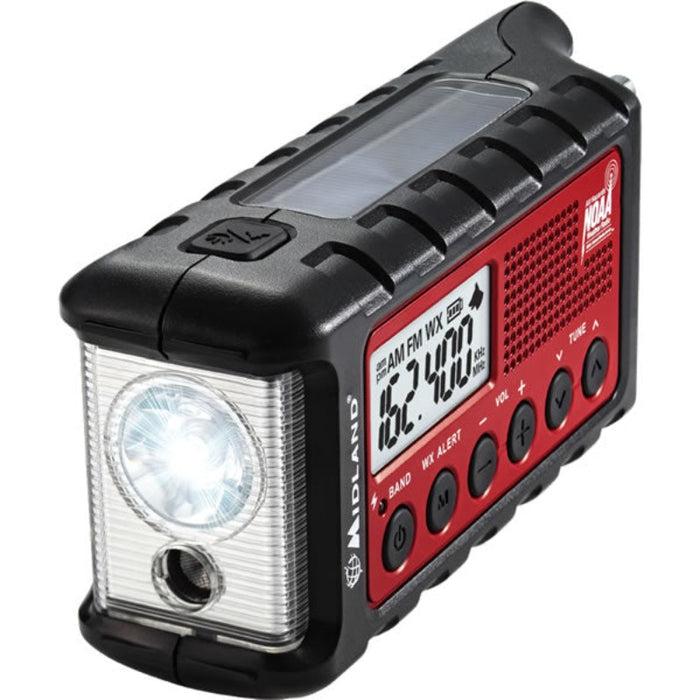
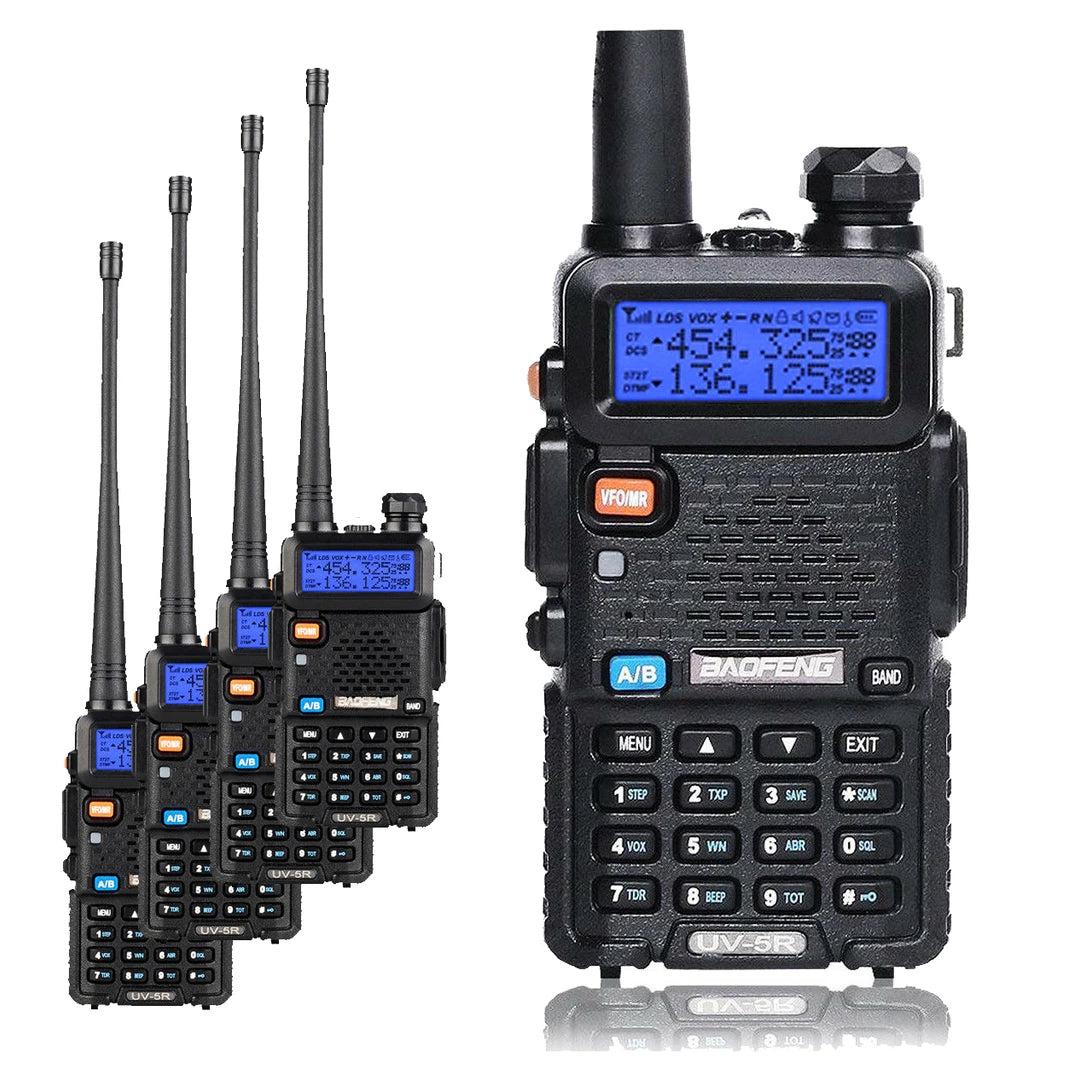
The Midland ER310 receives NOAA alerts plus AM/FM, and Midland rates its rechargeable battery at up to 45 hours of normal use. It charges over USB, by hand crank, or by solar panel, and it also runs on six AA batteries. For a scanner, add a Baofeng UV-5R: listening needs no license, but Baofeng notes that transmitting on amateur frequencies requires an FCC license. It lets you hear amateur operators and other analog traffic in its range during an outage.
Communication picks
Purchases through these links support the site at no extra cost to you. (?)
Midland
Midland ER310 Portable Emergency Crank Weather Radio
AM/FM/NOAA weather alert radio with a 3500 mAh rechargeable battery rated for up to 45 hours, solar and hand-crank charging, a 6 x AA backup, and a Cree LED flashlight.
- NOAA weather alerts plus AM/FM
- 3500 mAh battery, up to 45 hours of normal use
- Solar, hand crank, and 6 x AA backup (AA not included)
$89.99
Out of stock· checked
High demand! The ER310 is temporarily out of stock. We expect it back soon.
Baofeng
Baofeng UV-5R Dual Band Radio
VHF/UHF handheld that receives 136-174 and 400-520 MHz plus FM broadcast and NOAA weather. Listening needs no license; transmitting on amateur frequencies needs an FCC license.
- Receives 136-174 / 400-520 MHz
- 128 channels; supports CHIRP programming
- 1800 mAh battery (Baofeng chart)
$29.99
In stock· checked
Fire starting and thermal protection
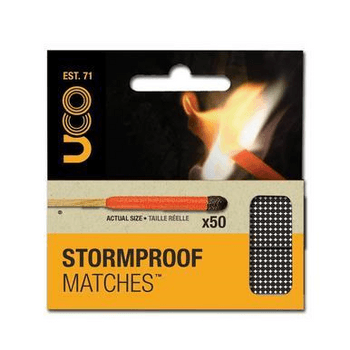
Carry more than one way to start a fire. Ready.gov lists matches in a waterproof container, and two lighters plus stormproof matches give you a backup when one method fails. UCO's Stormproof Match Kit keeps 25 matches in a floating, waterproof case, and UCO says each burns up to 15 seconds and relights after being dropped in water.
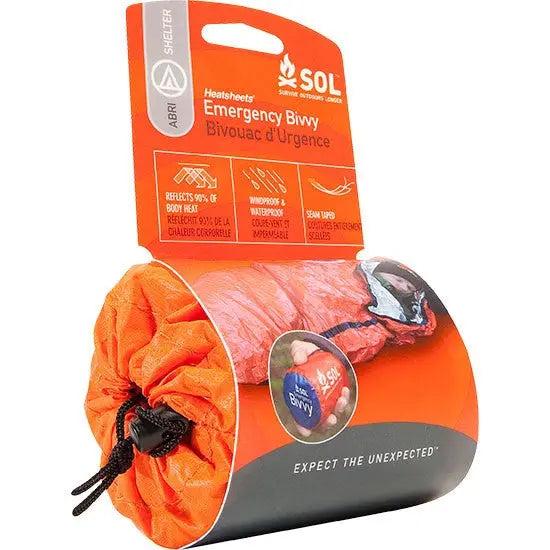
For warmth, the SOL Emergency Bivvy is a 3.8-ounce sealed bag that SOL says reflects 90% of body heat. The SOL Escape Bivvy reflects less (70%, per SOL) but breathes, cutting the condensation that builds up inside sealed bivvies. Pair either with a tarp for rain cover.
Fire and shelter picks
Purchases through these links support the site at no extra cost to you. (?)
UCO
UCO Stormproof Match Kit
25 stormproof matches in a floating, waterproof screw-top case with a replaceable striker. UCO says each match burns up to 15 seconds and relights after being dropped in water.
- 25 matches; case holds up to 40
- Burns up to 15 seconds, relights after submersion (UCO)
- 1.2 oz kit
$11.99
Price checked
SOL
SOL Emergency Bivvy with Rescue Whistle
3.8 oz sealed reflective bivvy, 84 x 36 in, that SOL says reflects 90% of body heat. A tinder-cord drawstring and survival whistle are attached.
- Reflects 90% of body heat (SOL)
- Waterproof, windproof, sealed seams
- 3.8 oz, 84 x 36 in
$24.49
Price checked
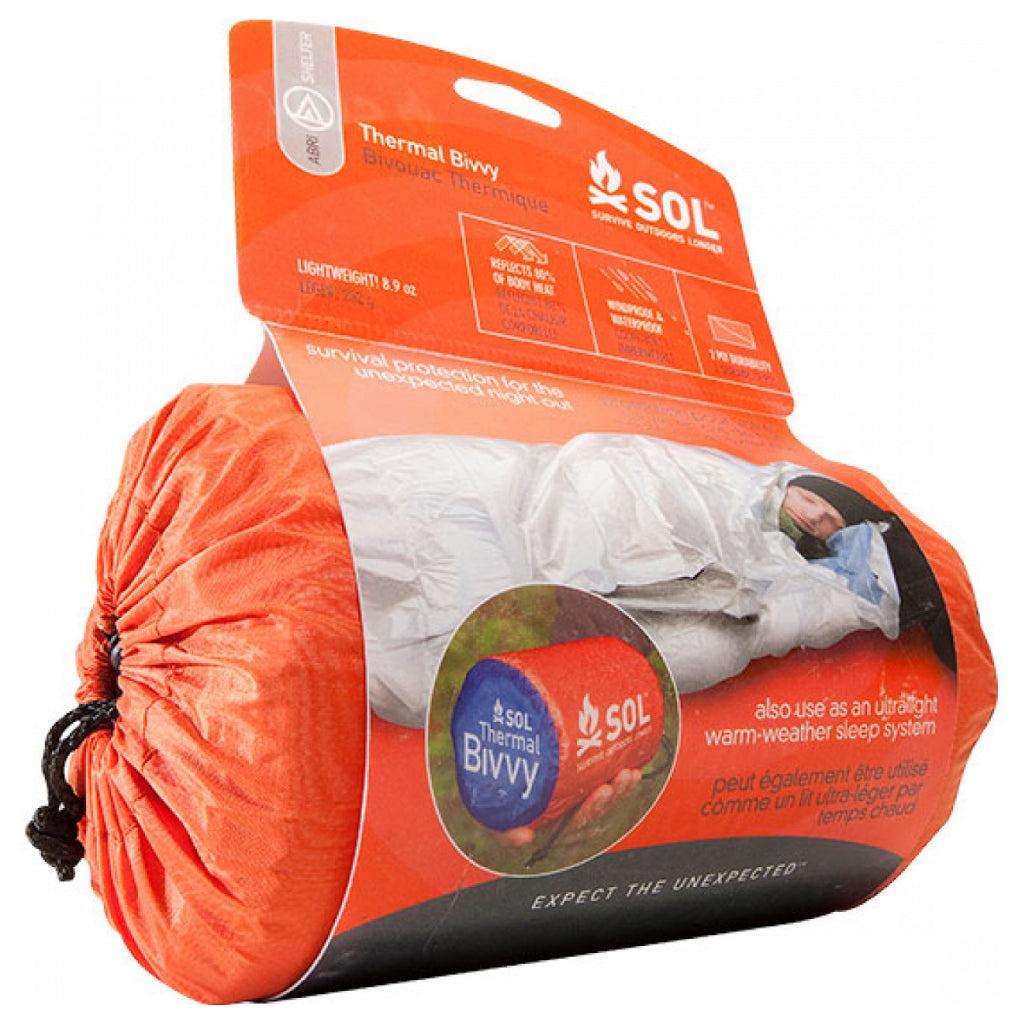
SOL
SOL Escape Bivvy with Hood
Breathable reflective bivvy that SOL says reflects 70% of body heat while letting moisture escape. 8.5 oz (Regular), 84 x 31 in, with an adjustable hood.
- Breathable: cuts condensation (SOL)
- Reflects 70% of body heat (SOL)
- 8.5 oz Regular, 84 x 31 in
$86.49
Price checked
Tools: multi-tools, knives, and repair supplies
A multi-tool is the most versatile single tool in a kit, and Ready.gov lists a wrench or pliers for turning off utilities. The Leatherman Wingman packs 14 tools, including spring-action pliers, wire cutters, and a locking blade. The Gerber Dime is keychain-size but still has pliers and a blade.
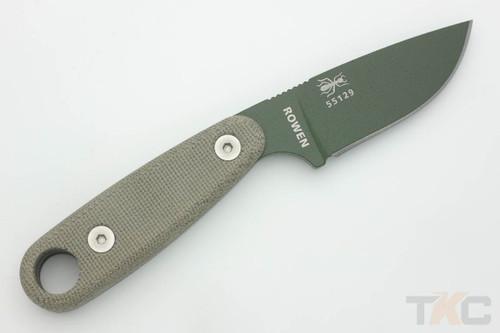
A fixed-blade knife handles heavier cutting than a multi-tool blade. The Morakniv Companion (S) has a 4.1-inch stainless blade at a low price. The ESEE Izula-II is a compact 1095 carbon steel knife; carbon steel needs drying and oiling to prevent rust.
Round out the category with tape, paracord, and zip ties for repairs and lashing. Ready.gov also lists plastic sheeting and duct tape for sheltering in place.
Tool picks
Purchases through these links support the site at no extra cost to you. (?)
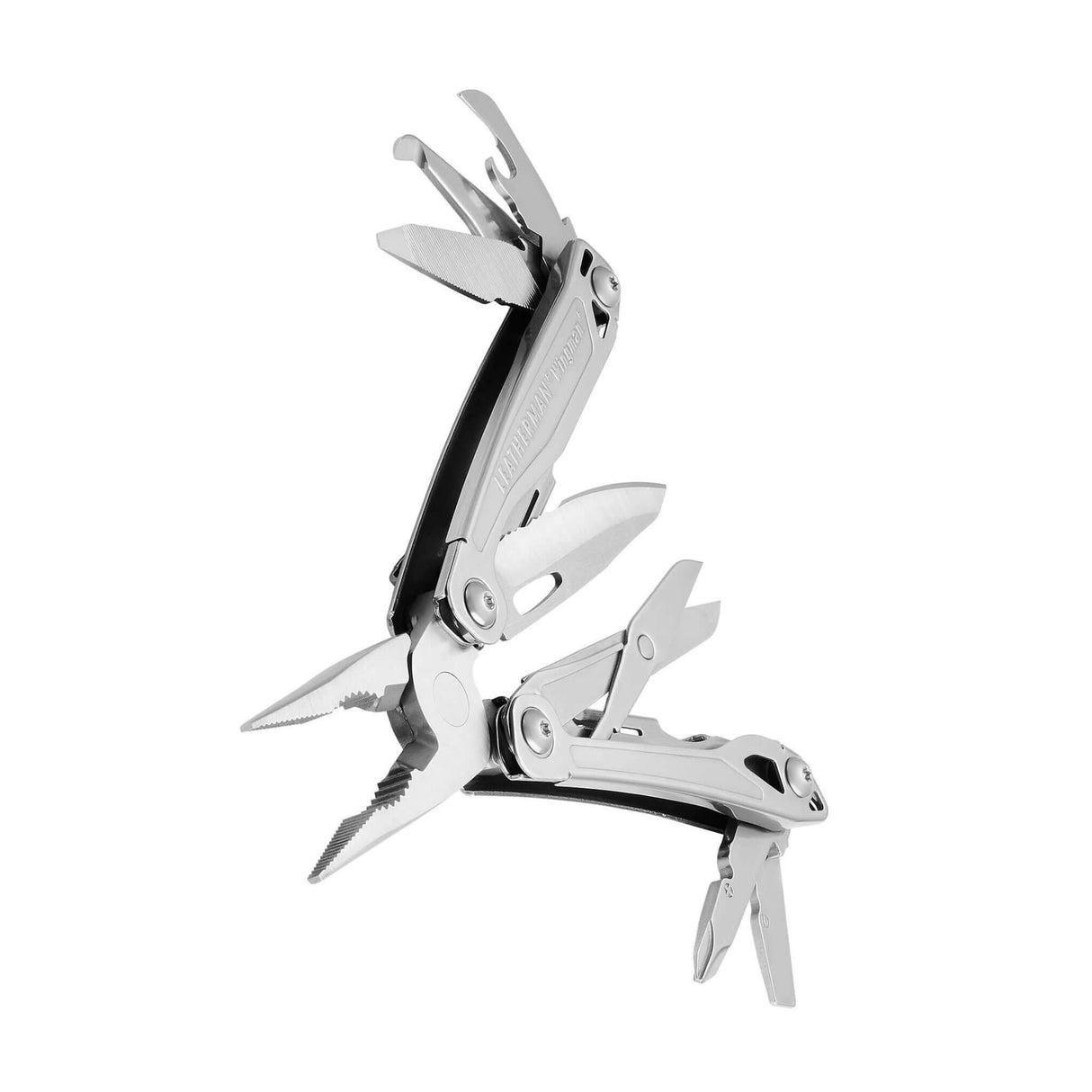
Leatherman
Leatherman Wingman
14-tool multi-tool with spring-action pliers and scissors, a locking one-hand-opening blade, and outside-accessible tools. 7 oz, 25-year warranty.
- 14 tools, spring-action pliers
- Locking 2.6 in 420HC combo blade
- 7 oz, 3.8 in closed, 25-year warranty
$49.95
Price checked
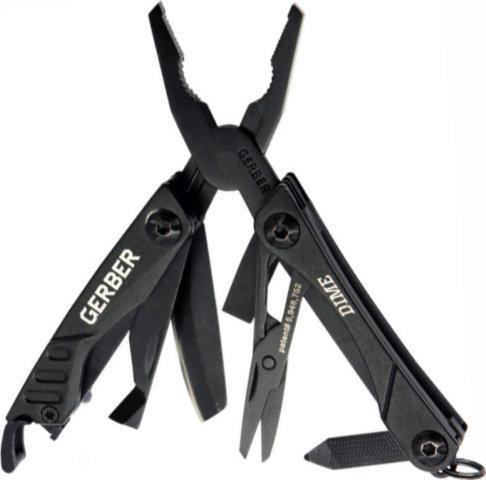
Gerber
Gerber Dime Multi-Tool
Keychain-size butterfly-opening multi-tool with spring-loaded needlenose pliers, wire cutter, 1.5 in blade, scissors, and a bottle opener exposed when closed. 2.2 oz.
- Spring-loaded needlenose pliers and wire cutter
- 1.5 in plain-edge blade, scissors, package opener
- 2.2 oz, 2.75 in closed
$27.99
Price checked
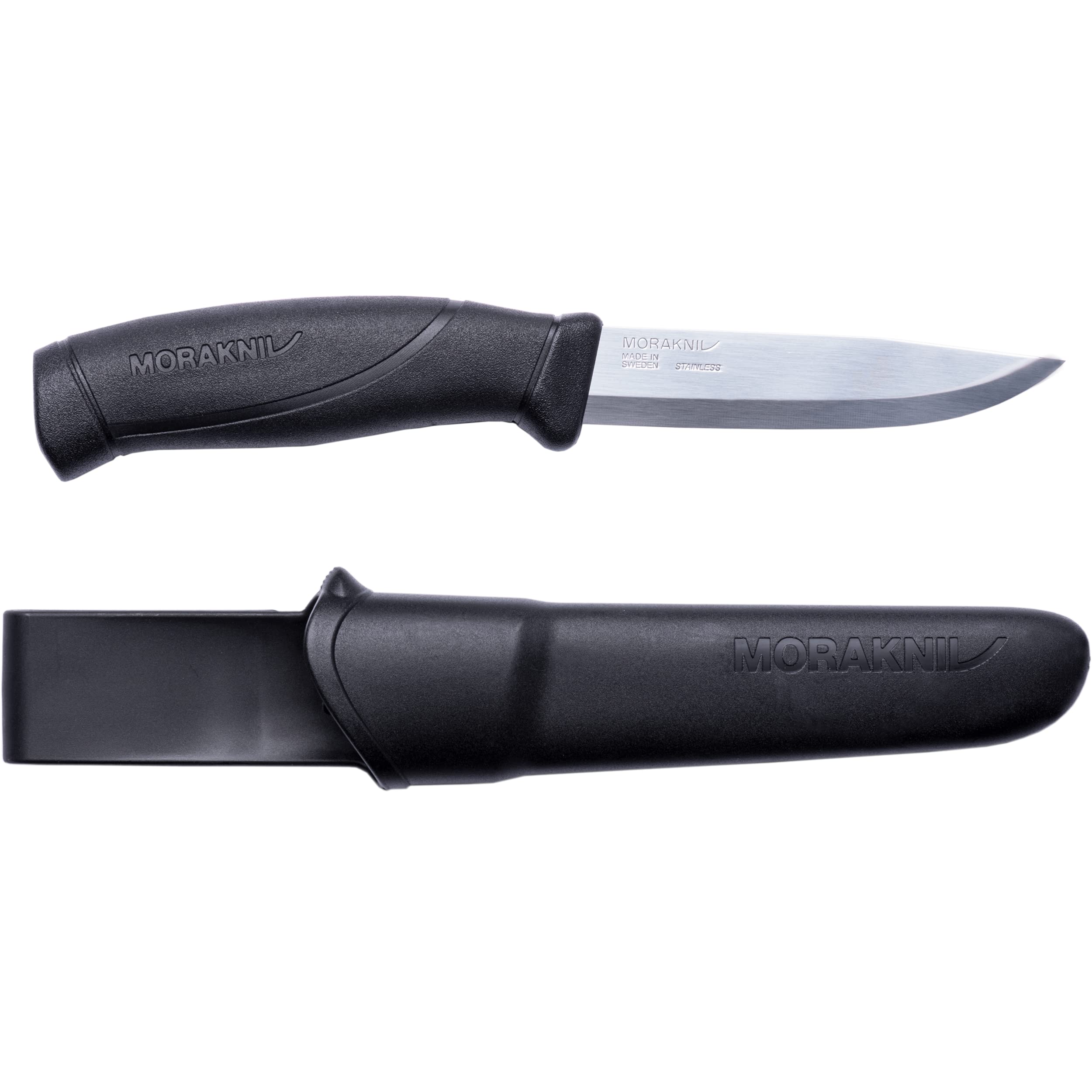
Morakniv
Morakniv Companion (S) Stainless Steel Knife
Swedish fixed-blade outdoor knife with a 4.1 in, 2.5 mm Swedish 12C27 stainless blade, Scandi grind, friction-grip handle, and plastic sheath. 4.18 oz.
- 4.1 in 12C27 stainless blade, 2.5 mm thick
- Scandi grind; TPE friction grip
- Sheath included; 4.18 oz
ESEE
ESEE Izula-II
Compact 1095 carbon steel fixed blade with canvas Micarta handle scales, a molded sheath, and clip plate. 6.75 in overall, 3.2 oz, unconditional lifetime guarantee.
- 2.63 in 1095 high carbon blade (ESEE)
- Canvas Micarta scales; molded sheath and clip plate
- 3.2 oz without sheath; made in USA
$92.95
In stock· checked
Power: battery banks and power stations
Your phone carries alerts, maps, contacts, and calls, so a charged battery bank belongs in every kit; Ready.gov lists a phone charger and backup battery in its basic supplies. A 10,000 mAh bank is a practical go-bag size. Anker rates its PowerCore Slim 10000 at about two charges for an iPhone 15, and the Nitecore NB10000 Gen4 adds an IPX7 water-resistance rating at 5 ounces.
For longer outages at home, a power station is the next step. The Jackery Explorer 300 stores 292Wh and runs small AC devices; the Anker SOLIX C1000X stores 1,056Wh and accepts up to 600W of solar input. Both can recharge from solar panels, which are sold separately, and neither burns fuel, so neither produces the exhaust that keeps generators outdoors.
Power picks
Purchases through these links support the site at no extra cost to you. (?)
Anker
Anker PowerCore Slim 10000 Power Bank (USB-C, 10,000mAh, A1229)
Slim 10,000mAh power bank with a two-way USB-C port. Anker rates it at about two full charges for an iPhone 15.
- 10,000mAh capacity
- Two-way USB-C charging
- 8.6 oz, 0.61 in thick
Nitecore
Nitecore NB10000 Gen4 10,000mAh Power Bank
5 oz, 10,000mAh (39Wh) power bank with two USB-C ports, 22.5W fast charging, and an IPX7 water-resistance rating: small enough for a glove box or every go bag in the house.
- 10,000mAh / 39Wh
- Two USB-C ports, 22.5W max
- IPX7 water resistant, 5 oz
Jackery
Jackery Explorer 300 Portable Power Station (292Wh LiFePO4)
7.5 lb portable power station with a 292Wh LiFePO4 battery, two AC outlets, 100W USB-C, and a 300W rated (600W peak) output.
- 292Wh LiFePO4 battery
- 2 AC outlets, 100W USB-C, 2 USB-A, car port
- 7.5 lb
Anker SOLIX
Anker SOLIX C1000X Portable Power Station (1,056Wh, 1,800W)
A 1,056Wh lithium iron phosphate (LiFePO4) battery station with six AC outlets and 1,800W continuous output. It burns no fuel, so it can run indoors.
- 1,056Wh LiFePO4 battery, rated 3,000 cycles to 80%
- 1,800W pure sine wave AC output, six AC outlets
- Recharges from a wall outlet or up to 600W of solar
Documents, cash, and identity
Keep cash and copies of important documents in your kit. Ready.gov suggests cash and important family documents, such as insurance policies, identification, and bank account records, saved electronically or in a waterproof, portable container.
Card readers, ATMs, and payment apps need power and a network, so small bills are the fallback. Add an emergency contact list on paper, since a dead phone takes your contacts with it, and keep a USB drive or encrypted cloud copy of your document scans.
Kit maintenance and rotation
A kit only works if it is current. Ready.gov advises keeping food cool and dry, replacing expired items, and re-thinking your needs every year as your household changes. A check twice a year, such as at the spring and fall clock changes, keeps it simple.
| Item | What to check |
|---|---|
| Emergency food | Dates; replace expired items and keep food cool and dry |
| Batteries | Test lights and radios; replace weak or expired batteries |
| Battery banks | Recharge and confirm they still charge a phone |
| Water filter and tablets | Clean the filter as its maker directs; check tablet dates |
| Medications | Replace expired OTC and prescription medicines |
| Cash | Confirm the total and that the bills are small |
| Documents | Update contacts, insurance, and ID copies |
| Household needs | Re-think needs as family members, pets, or health change |
72-hour kit cost by tier
Every tier covers every essential category. Mid-range buys better filtration, freeze-dried meals, a trauma kit with chest seals, and a rechargeable headlamp; premium adds redundancy and a breathable bivvy. Start with budget and upgrade one category at a time. These totals come from the kit builder above and include the emergency cash.
| Category | Budget | Mid-Range | Premium |
|---|---|---|---|
| Water | $34 | $79 | $94 |
| Food | $17 | $209 | $216 |
| First Aid / Trauma | $73 | $127 | $127 |
| Lighting | $64 | $138 | $138 |
| Communication | $45 | $95 | $128 |
| Fire / Warmth | $21 | $50 | $122 |
| Tools | $56 | $155 | $232 |
| Power | $21 | $84 | $105 |
| Shelter | $45 | $90 | $150 |
| Documents / Cash | $105 | $210 | $310 |
| Total | $481 | $1,237 | $1,622 |